
Within the leadership philosophy of “Intent-Based Leadership,” there is a saying that goes: “Create leaders, not followers.” It sounds great, and no one would argue against it, but do you really understand what it means? I didn’t, until I heard a story that I will now share with you. It all began when my colleague
Continue reading
Tomas Björkholm

Bill Fischer and the Dynamics of Haier’s Entrepreneurial Ecosystem

In a session for the Leading Complexity Program 2022, Bill Fischer shared his knowledge about Haier’s Entrepreneurial Ecosystem and RenDanHeYi, the culture behind it. Here is a summary of the session. If you want to see the recording of the session, please sign up for this year’s program. Here are some insights: In this session,
Continue reading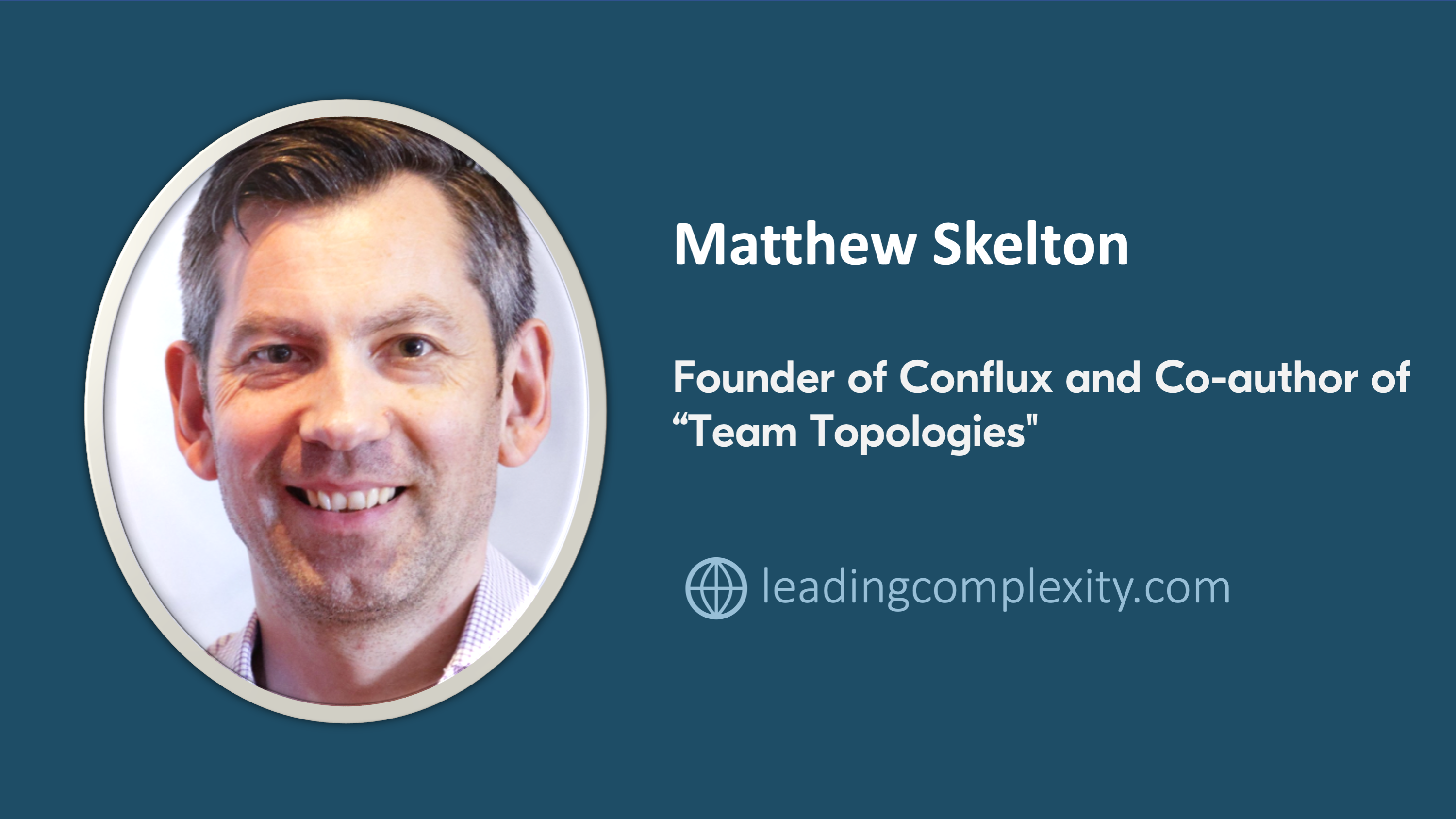
Interview with Matthew Skelton co-author of “Team Topologies”
I had the great pleasure of meeting Matthew Skelton for an interview about his view on complexity. In this interview, Matthew discusses the different types of complexity and how leaders can maneuver in complex environments. He also talks about the Team Topologies framework, which is a tool that can help organizations become more adaptable to
Continue reading
Interview with Lyssa Adkins
Hear Lyssa Adkins, author of the legendary book “Coaching Agile Teams”, talk about complexity and the importance for leaders to upgrade, downgrade and expand. A short summary of the interview Lyssa Adkins, an experienced Agile coach, has shifted her focus to leadership development and effective leadership team functioning. In the interview, she discusses adapting to
Continue reading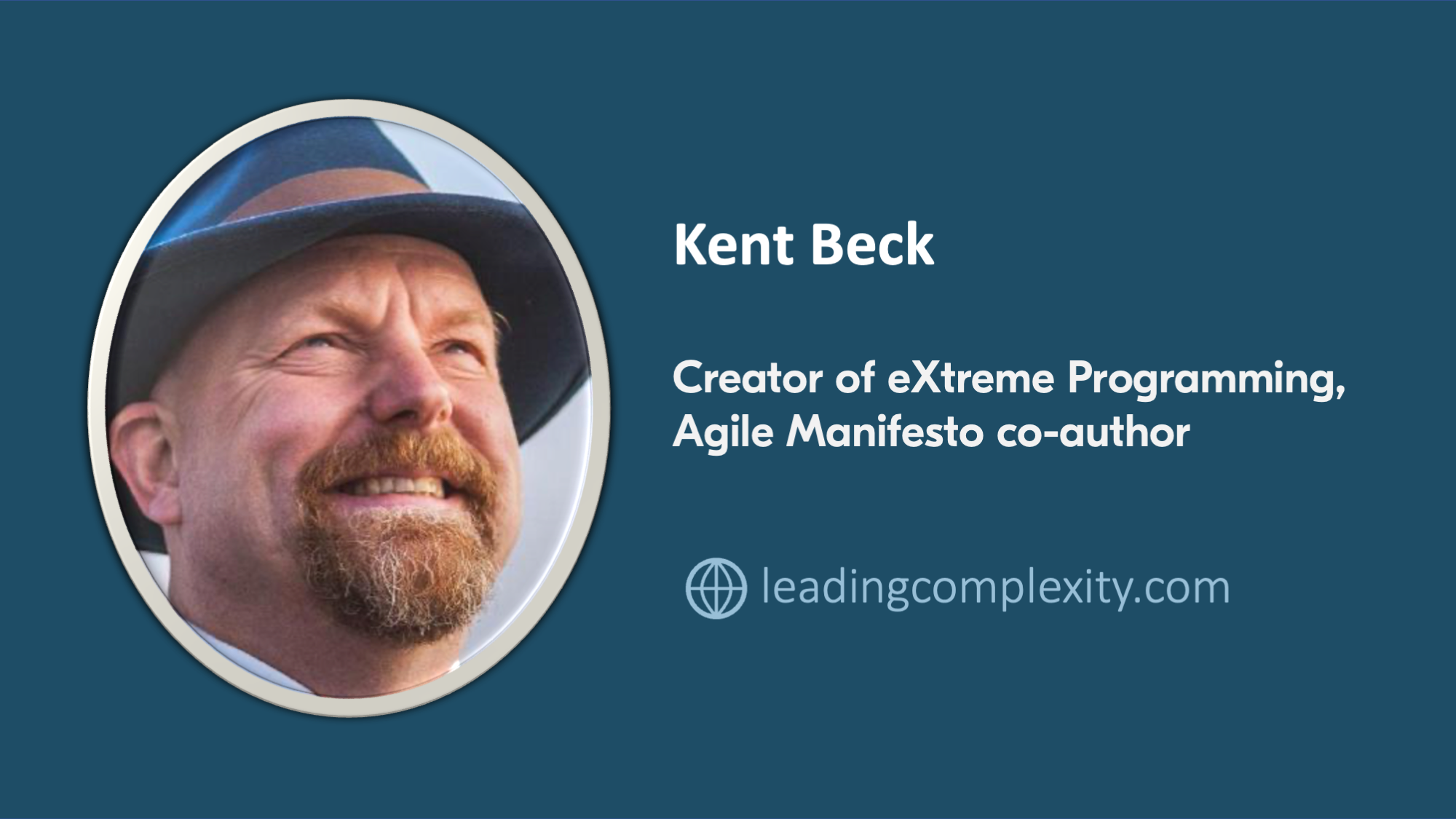
Interview with Kent Beck
In this year’s edition of the Leading Complexity program, we are privileged to welcome Kent Beck, the mastermind behind eXtreme Programming and a distinguished signatory of the Agile Manifesto. Dive into our interview with Kent as he shares insights on navigating complexity and offers invaluable guidance on addressing it. Summary of the video below The
Continue reading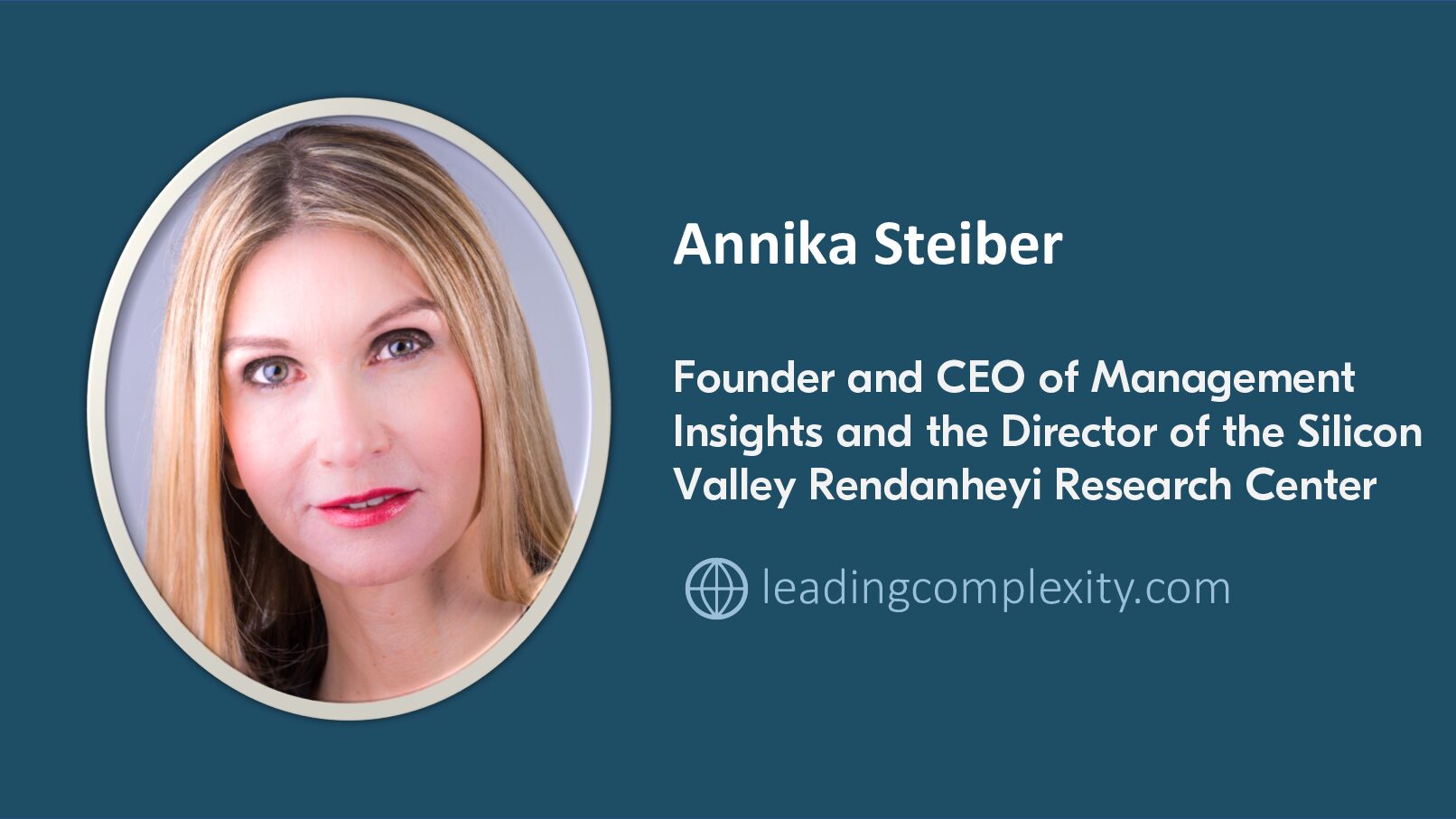
Interview with Dr. Annika Steiber about complexity
In our upcoming Leading Complexity program this fall, we are honored to host Dr. Annika Steiber as a speaker. With years of dedicated research into the success stories of Silicon Valley companies, Annika has delved deep into the common managerial models that drive their achievements. I recently had an enlightening conversation with Annika, gaining insights
Continue reading
Interview with Stephen Bungay about Leading Complexity
Watch the video on our LinkedIn page. Hello Stephen Bungay. How nice to have you in the Leading Complexity program. For those who don’t know you, who are you? When I started my business career in the early 1990s at the Boston Consulting Group, I spent close to 20 years there. End then I left
Continue reading
Interview with Henrik Kniberg about Leading Complexity
View the video at our LinkedIn post. Hello Henrik Kniberg. It’s very nice to have you in the Leading complexity program. For those that don’t know you, how would you introduce yourself? I’m a Swedish dude who is a coach and a software developer. I have worked at Spotify, Lego, and Mojang. I had a
Continue reading
Interview with Mary Poppendieck about Leading Complexity
Watch the video in our LinkedIn post. For those who don’t know you, can you quickly introduce yourselves? Tom and I are authors of four books on software development and managing software development, bringing lean concepts into the whole process of managing software development. Before that, we had many many decades of experience actually writing
Continue reading Interview with Bjarte Bogsnes about leading complexity
Watch the video in our LinkedIn post. Hello Bjarte. We are so happy to have you in our Leading Complexity program. For those who have not met you, can you tell us about who you are and your background? I’m a finance guy by education but have also worked in human resources. I work with
Continue reading
Interview with Johanna Rothman about leading complexity
See the video in our LinkedIn post. Welcome to the Leading Complexity program, Johanna. Please let the audience better know who you are. People know me as the pragmatic manager because that’s the name of my monthly newsletter and it’s also what I do. I really believe that management has a role to play –
Continue reading How to create useful documentation – only write the table of content
This article is a follow-up to my post on lean documentation that I published some time ago. In summary, lean documentation is characterized by being easy to consume and simple to keep updated. The purpose of lean documentation is to help you, as the reader, find answers to your questions, not to hold the detailed answers
Continue reading The paradox of masterly management leadership style
To understand this article, first read Managing in Mayberry by Don Gray & Dan Starr: https://www.donaldegray.com/managing-in-mayberry-an-examination-of-three-distinct-leadership-styles/ In short, it is about three different styles of leadership, depending on their view of the problem. The situation is that, in heavy traffic, left-turners may cause a queue of cars that leads to a dangerous situation. Officer Barney’s micromanaging leadership
Continue reading
Need help refining your backlog and finding small MVPs?
I guess you, like the most of us, have a problem breaking work down to small but still valuable pieces and that your MVP (minimal viable product) is more or less the same as the project scope. If you recognize yourself in this than keep reading.

Doing Scrum with Multiple Teams: Comparing Scaling Frameworks


Our article about Scaled Scrum has been published on InfoQ. In the article we describe the basics of LeSS, SAFe, and Scrum@Scale and show the similarities and differences between them You find the article about Scaled Scrum at InfoQ. Enjoy!
Continue reading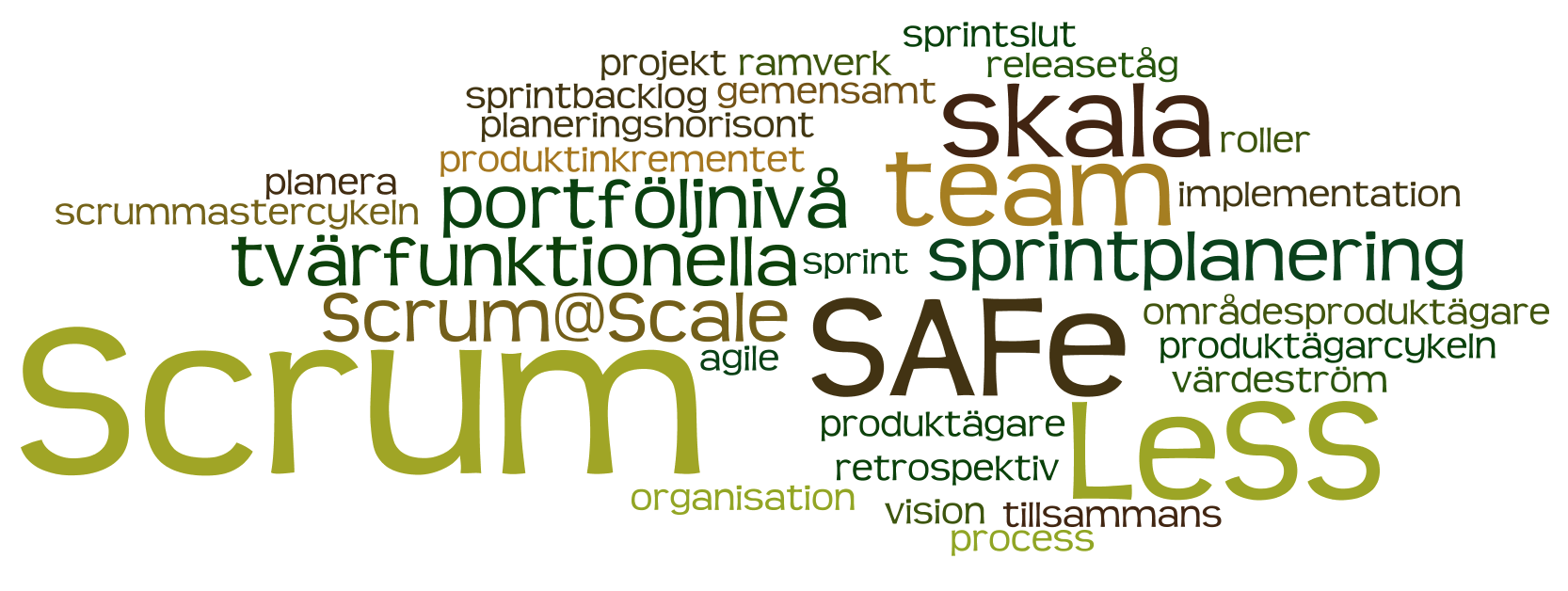
Scrum med flera team
Att organisera flera Scrum team görs på en hel del olika sätt. Här beskriver vi likheter och skillnader mellan några av de ramverk som vi har stött på hos våra kunder och utbildare, LeSS, SAFe och Scrum@Scale.
Gemensamt för LeSS, SAFe och Scrum@Scale
I alla tre ramverken utgår man från att man i botten har vanliga Scrum-team som är tvärfunktionella och självorganiserande.
Man utgår också från att vi alltid försöker bryta ner kraven vertikalt, så att varje inkrement blir så litet som möjligt men ändå kan driftsättas separat.
Underförstått är även att man kör kontinuerlig integration och automatiserad regressionstestning, och att man efter varje sprint har en produkt som går att driftsätta ifall man så väljer.
New book from Crisp – Kanban in 30 days
Designed as a 30-day action plan, this book will help you understand and implement Kanban – and start seeing results – in a month.
Analyze your current situation and define your goals and wider strategic aims, and begin developing a plan to help you and your team confidently work towards achieving them. Involve your team into driving cultural change, learn how to prioritize, and organize tasks and projects to efficiently use your time and resources.
Create your own value stream map to better understand your processes and identify improvement areas, and adapt and use the features, tips, and examples to overcome challenges you may face when implementing Kanban. Pick up this book and experience the full results of this vital Agile methodology-fast.
Who this book is written for
If you want to simplify your processes, improve collaboration, and manage projects successfully, this guide to Kanban is an essential companion. Continue reading
Lean Documentation
My amateur research has given me the insight that the three most important things for greater effectiveness and good quality are knowledge, knowledge and knowledge. Knowledge is best acquired through a dialog but a dialog is only efficient if it includes someone with knowledge. Unfortunately, there are situations when such a person is not around.
Continue reading
The House of Agile – A visualisation of the core of Agile
What is Agile, actually?
Have you ever asked yourself the question, ”what is Agile”? Ever been asked the question and found yourself looking for the easy answer? The true answer is of course that Agile is the Agile manifesto but do you know anybody who can recite the manifesto just out of his or her head? When asking what is Agle, it’s more likely you will get the answer that Agile is about being flexible or about high efficiency. Some will say Agile is about having a Scrum Master, daily stand-up meetings and notes on a white board. I think Agile is much more than that and in this post I will tell you the answer, the short answer, I have found after many years looking.
Is it important to know what Agile actually is? Yes, of course. If you don’t know, how can you know in which direction to change your way of working when you decide to go Agile. By the way, Agile is a direction how to improve your way of working, not a place or a fixed description of how to work.
To make Agile easy to understand I will borrow a symbol from Lean, the house
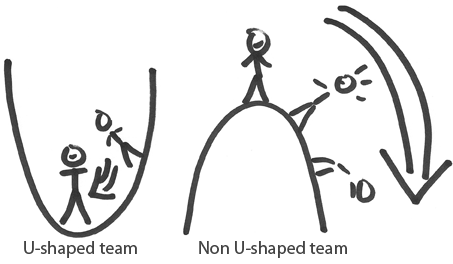
T-shaped people and U-shaped teams
I guess you have heard about T-shaped people, that is, people with deep skills within one or a few areas combined with some knowledge in many areas.
Now it’s time to introduce U-shaped teams. That is, teams that are balanced and where teammates are helping each other. It’s a team where you might have a bad day and are allowed to fail without causing consequences. It’s where the teammates help you get back to normal and what’s more make you feel comfortably included in the team. Your team becomes your safety net and it’s the place where you can dare to be vulnerable. U-shaped teams are also good for productivity since safety means productivity. *
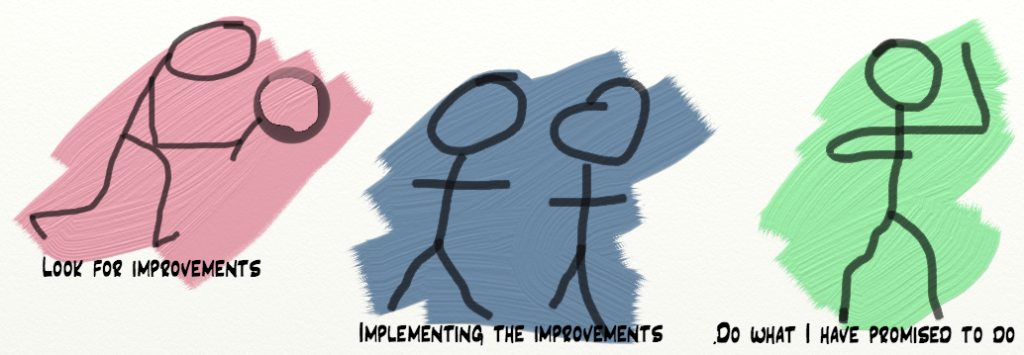
Shorter version of: Responsibility the Agile way
A couple of months have passed since I wrote the post “Responsibility the Agile way” and I have refined it since then. Here is the new and more slim version:
1) I promise to look for improvements, both opportunities and problems.
2) I promise to participate in implementing the improvements. I will at least communicate the improvement possibilities I have found.

Responsibility the Agile way
I am a teacher of Agile methodologies which means that I teach collective responsibility. I often get the response that ”everybody’s responsibility is no one’s responsibility”. To make everyone really take responsibility we need to define what we mean with responsibility the Agile way. Here is at least my version:
We are all responsible for contributing with our intelligence and senses for the best of the product and the process. We are also responsible doing what we have said we will do and being transparent with our progress.
If you think that is too fluffy, here comes more details about what I think Agile responsibility means:

Pomodoro meeting
While reading a blog post by my Crisp colleague Anders Laestadius I remembered a meeting type I tried a few years ago. We called it “Pomodoro meeting” since it was timeboxed to 25 minutes, just as the time management technique Pomodoro.
This is how it was conducted:

Improve the improvement process
Do you do Scrum? I would guess that 90% of Swedish programmers would answer yes.
Do you have retrospectives? Again most developers’ answer is, yes.
Will you empty the impediment backlog before the next retrospective? Silence.
This post is for those of you who remain silent after the last question.

2:nd version of Kanban Kick-start
Kanban kick-start has been updated. What’s new? Not much but I met David J Anderson and after that meeting I felt I wanted to make some changes to be more compliant with the content of his course “Kanban for Managers”. Please enjoy. http://www.crisp.se/wp-content/uploads/2012/07/Kanban-kick-start-v2.pdf If you like to have a version with the changes visualized, please let
Continue reading Kanban Kick-start
For everyone who asks the question, how do we get started with Kanban. Here comes one way of kick starting a Kanban team.
Continue reading Did you notice the big shift in software business
Maybe you didn’t notice it but there has just been a minor earthquake in the software business. The king has lost his crown; it’s a major shift in the hierarchy.
Go for success
Jeff Sutherland often talks about ready-ready. It sounded clear the first time I heard it. But I have recently got a deeper understanding of the concept. Here is my new understanding and why I think it’s important for successful development.
Continue reading
Jättarna blir agila
(Sorry to international readers. This is a comment to a notice in a Swedish magazine. That’s why I write his in Swedish)
I dagens Computer Sweden skriver Lars Danielsson om två stora Agila projekt och vad de har gemensamt. Som insider kan jag avslöja fler saker de har gemensamt.
Agile Support with Kanban in French
My paper about Agile Support has been translated to French.
Continue reading