
A conversation with long-time Crisp collaborator Jonathan ReamsSummary (Abstract) AI is accelerating our tools—and our context. In this Leading Complexity Podcast episode, Jonathan Reams argues that leaders must grow their inner capacity at least as fast as AI evolves, or risk being led by the very systems they deploy. We explore how adult development, complexity
Continue reading
Interview with Doug Kirkpatrick


M: Hi, Doug. Great to have you in the Leading Complexity program for the fall. You have been a guest with Crisp before, but for those who don´t know you, who are you? D: Thanks, Michael. I am Doug Kirkpatrick. I helped start Morningstar over 30 years ago here in Northern California. Morningstar organized around
Continue reading
Advice to become ready for a transformation

How to prepare and align as a leadership team for a major change in your organization
You are a senior leader in your organization, and you are facing some challenges. You have had that slow hunch for some time now that there are plenty of things that are just not right. Things beyond just individual isolated problems. People in your organization often bring up small things that should be looked at because they seem to be connected to plenty of recurring friction points in several places that hold people back.
You have also come to realize that there are a few big things we have to change to really tap into our potential. If we don’t, our goals may never come within reach. Maybe even worse, we may risk losing ground.
You feel you share this view with some of your colleagues on your senior leadership team. But you are not certain to what extent they see what you see and how they would explain what needs to change.
You want to take the initiative, but you are not sure about how.
How do we know if we are ready to start a major change effort, and what do we need to do to get there if more work is needed?
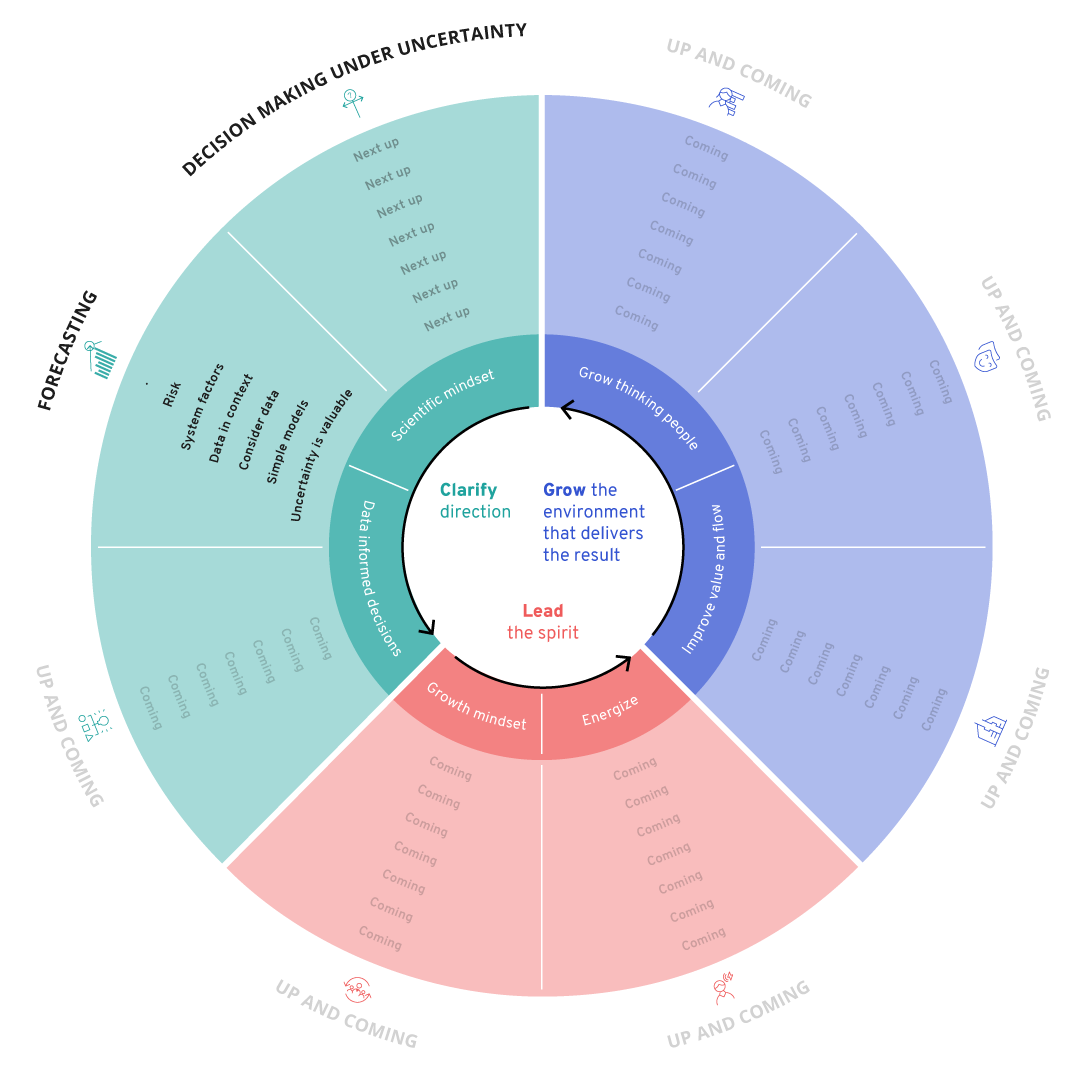
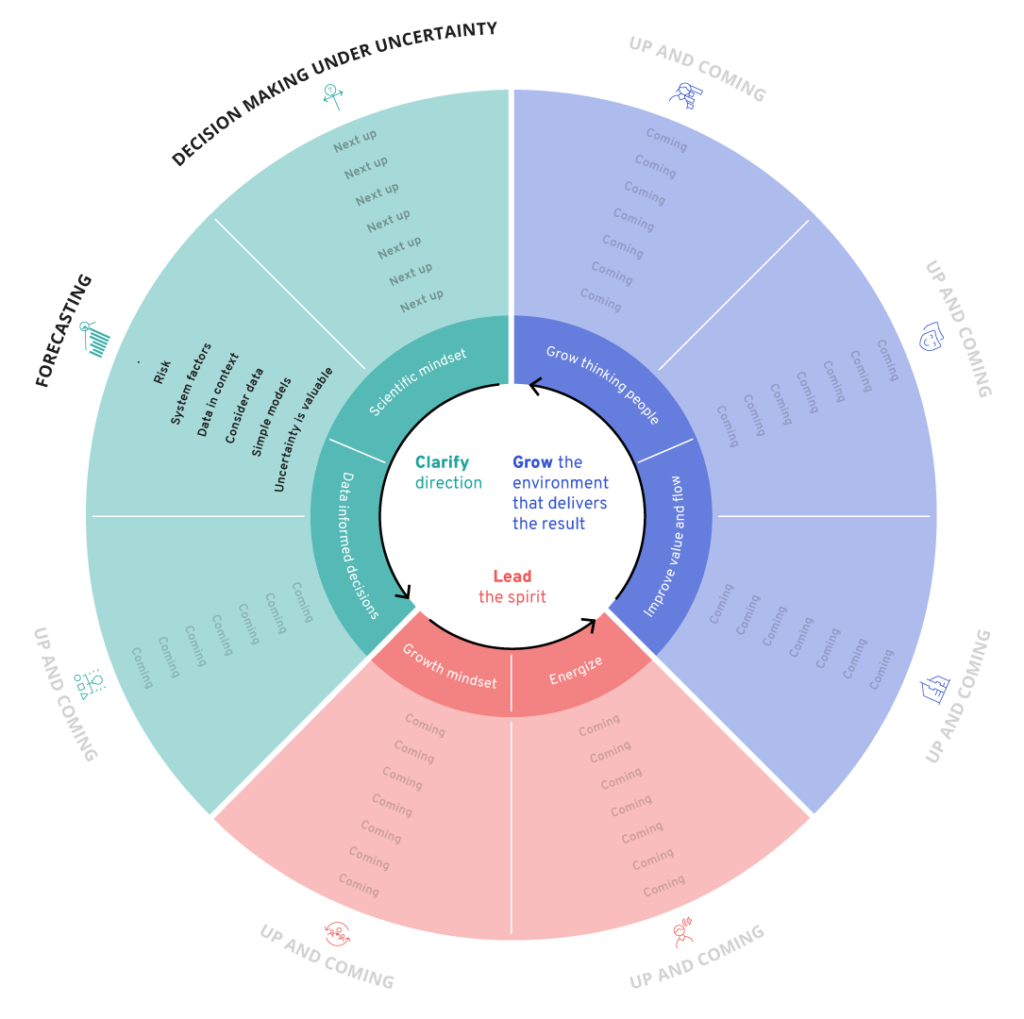
Introducing: The Agile Leadership Practice Library

Have you ever wrestled with these questions in a leadership scenario?
“How can I get the company to be more proactive and self organized without me being around all the time?”
“I’m a practical guy, I get most theories, but what do I do with them?”
“What is a good start when we are talking about building an Agile organization?”
If so, then this is for you.
Today the Agile Leadership Practice Library is launched
Continue reading

The paradox of masterly management leadership style

To understand this article, first read Managing in Mayberry by Don Gray & Dan Starr: https://www.donaldegray.com/managing-in-mayberry-an-examination-of-three-distinct-leadership-styles/ In short, it is about three different styles of leadership, depending on their view of the problem. The situation is that, in heavy traffic, left-turners may cause a queue of cars that leads to a dangerous situation. Officer Barney’s micromanaging leadership
Continue reading
Health checks for Teams and Leadership

In this blog post I want to share a powerful tool, the Leadership Health Check. It will help you become stronger as a management team and reveal improvement opportunities for how you, as a team of active servant leaders, better can enable the agile teams you support.
But first, let’s take it from the beginning.
One of my favourite exercises in my toolbox as an agile coach is something I learned during my years at Spotify; the Squad Health Check. It’s a retrospectives format, a self-evaluation workshop, in which the teams express how they feel they’re doing on wide variety of topics such as collaboration, value of what is delivered, ability to influence, received organizational support, etc. The result generates insights and commitment to actions of improvement for both the team and the supporting leadership. I love it because I believe it’s a great tool for strengthening autonomy, culture and continuous learning.
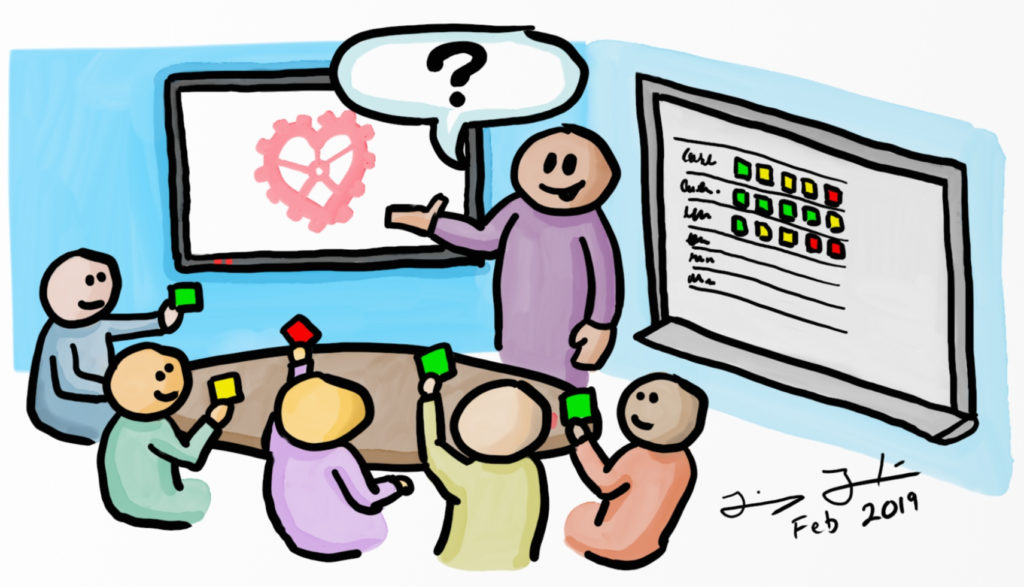
More than a year ago, a colleague at Spotify Georgiana Laura Levinta and I created a health check for the leadership of our Tribe (Tribe is a semi-autonomous department at Spotify encapsulating 4-8 teams and with a dedicated set of leaders and managers). Geo and I were inspired by the Squad Health Check, but the goal with this adoptation was to help the Tribe’s managers perform a self-evaluation of their ability to provide active supportive leadership to the squads within the tribe, and to generate a discussion on how they can improve as a team to be able to provide even better support.
Since then, I have together with my current client Casumo, adopted this for their context, culture and beliefs. We’ve run it several times with great success and value, both with the company’s leadership team but also on cluster level (semi-autonomous department). I believe the Team Health Check and the Leadership Health Check both are tremendously powerful; hence I want to unleash them to the wider agile community, hoping that more organizations will find them valuable and useful. Or at least be inspired by them, and then try something totally different.
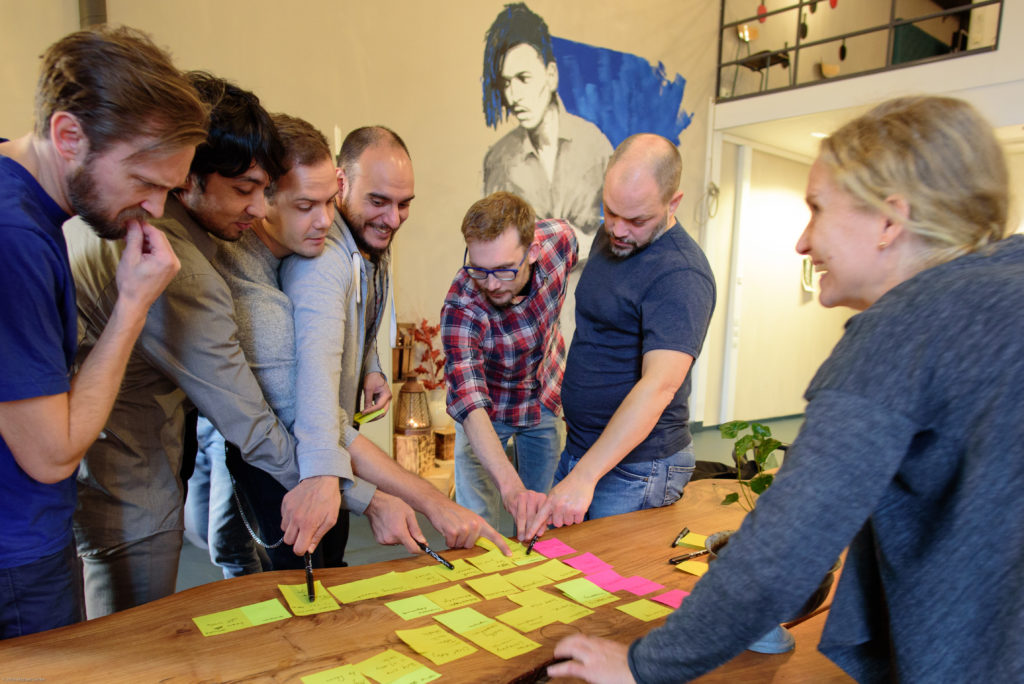
The iZettle Example: Decentralized Tech Development In Practice (Case Study)
Don’t stand in the way of great employees.
That’s one of the operational mantras that guide the finance technology company iZettle.
Two others are “Keep the startup spirit strong” and “Stay adaptable to changing market needs.”
In this blog post, we share some of the things we are implementing and tweaking at iZettle to keep producing great results and attracting in-demand, talented developers. My role has been to assist the tech development organization in making this work.
(Another blog post coming soon will cover the transformation of making the whole company agile, while this post focus on the practices that are put in place to keep a high performing, decentralized tech development organization at iZettle.)
Let’s begin by facing the reality of fast-growing startups.
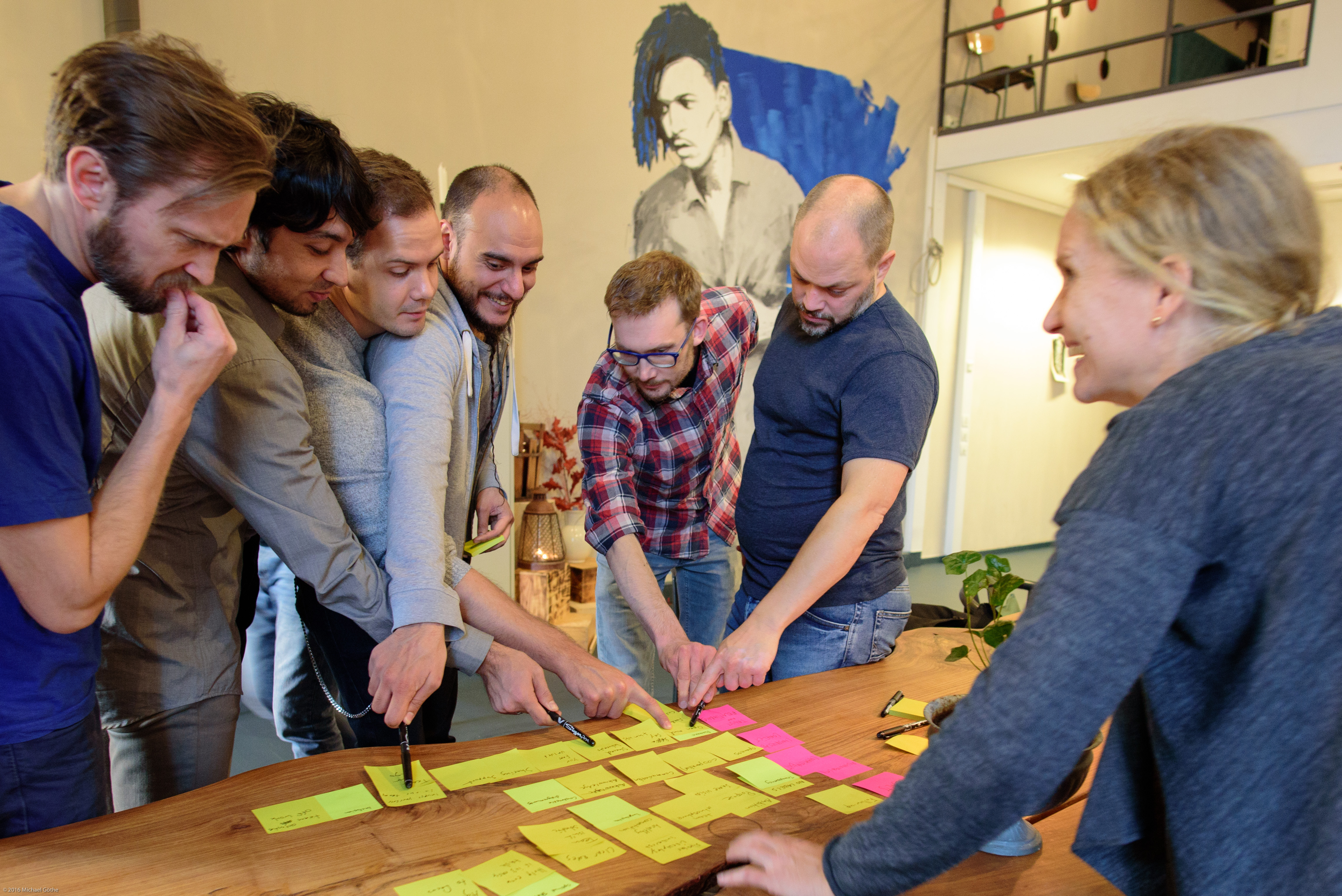
The organizational challenges for most fast-growing startups
Most startups want a flat organization to keep their entrepreneurial juices flowing, but when new employees join in a steady stream there eventually comes the point where the founders or upper management feel overwhelmed by chaos.
Things get confusing.
Employees aren’t seen.
No one seems to know what’s going on.
What usually happens for most start-ups at this point is that bureaucracy processes start piling up. Layers of management are added, and project managers are introduced to coordinate the chaotic environment. And so are written reports for managers to send to upper management, and silos are building up between different departments. And decisions are taken somewhere else.
And then what happens?
Usually, entrepreneurial enthusiasm suffers and so does talent motivation and speed of innovation.
And that is exactly what iZettle wants to prevent.
But that is easier said than done when a company grows like a wildfire.
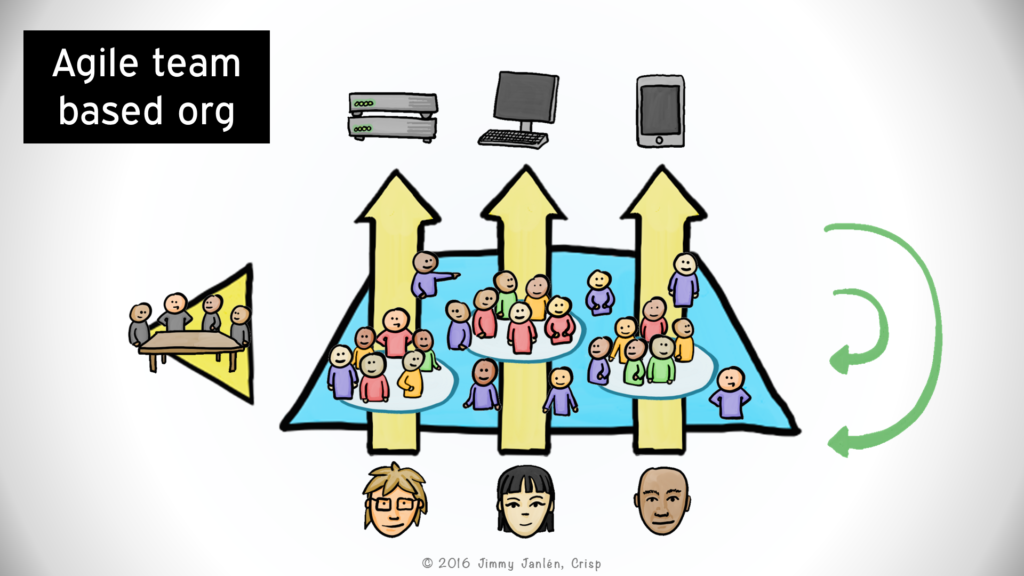
Transforming the pyramid to an agile org
I recently published a video exploring how an agile team based organization could look like. How does it function under the hood? In the video I also discussed how you get there.
I got tons of great feedback so I decided to provide the contents of the video in the format of a blog. If you prefer to read instead of watching a 11-minute-long video, then this is for you 🙂

Stephen Bungay on Agile Strategy
Last month, we had the pleasure of bringing Stephen Bungay to Crisp in Stockholm to share with us his wisdom and insights on how to use Strategy under uncertain conditions. I find this topic interesting, since the interative nature of Agile can trick management into believing either that they do not need to have a
Continue reading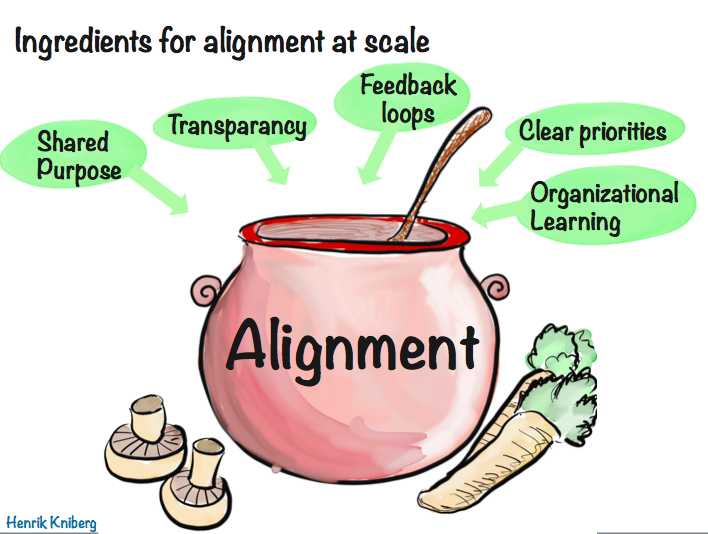
Alignment at Scale – slides from my Agile Africa keynote

Here are the slides from my Agile Africa keynote Alignment at Scale (or How to Not become Totally Unagile when you have Lots of Teams). Thanks for a great conference!
And thanks everyone for the Emma greeting, that sure made an 8 year girl very happy 🙂
(Emma was supposed to join me on this trip, but couldn’t make it because I had missed some required paperwork for travelling with minors to South Africa).

Growing up with Agile – Minimum Viable Bureaucracy at Spotify

The Spotify ‘model’ was presented in 2012 and has stired a lot of interest in the agile community and the software industry in general. In May I was asked to talk about this a the Bay Area Agile Leadership Network meetup in San Francisco (where I at that time was working as an agile coach
Continue reading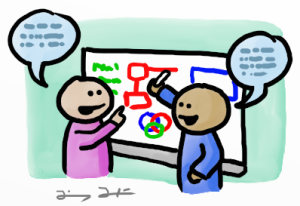
12 seemingly normal things Agile people do
Last week, I got this great question from Faraz (a manager for an energetic customer support crew) who is experimenting a lot with getting more Agile. “What seemingly normal things do Agile people do?” I realized that we rarely talk about the small things that effective Agile people do. What makes a great difference is rarely the big sweeping change programs, but rather, the small everyday things we do without thinking about it.
So here’s a list of 12 seemingly normal things Agile people do which we don’t pay much attention to that can make a big difference.
Whiteboard problem solving

Better meetings with the Core Protocols

Good meetings is very much about achieving deep collaboration. But collaboration is often hard. We go into meetings with different modes, intentions, and expectations. How can we make meetings both more fun and energetic? Surprisingly enough: maybe by being more formalized.
Continue reading
What is an Agile Leader?
(translations: Russian, Turkish)
Agile product development has become the norm in many industries (especially software). That means products are developed by small, self-organizing, cross-functional teams, and delivered in small increments and continuously improved based on real customer feedback. Pretty much as described in the Agile Manifesto – but replace the word “software” with “product” (because it really isn’t software-specific).
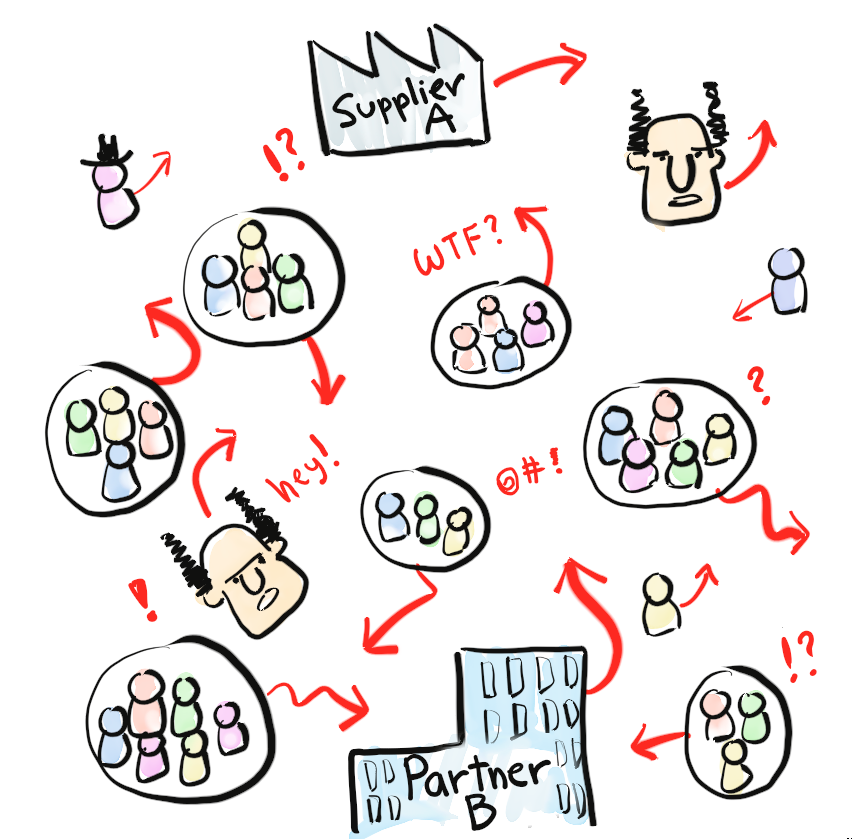
That’s all fine and dandy. However when things get bigger, with dozens of teams collaborating over organizational boundaries, things obviously get more complex and painful. Even if the entire organization is neatly organized into scrum teams, you can still end up with an unaligned mess! Here’s a picture that might feel familiar:

Släng titlarna
Finns nu i bokform på Leanpub
Detta är den fjärde posten i en serie om agil HR “from the trenches”.
Del 1: Continuous investment
Del 2: Lägg ner utvecklingssamtalen
Del 3: Lön är rättvis ersättning – inte belöning
Del 4: Släng titlarna
Del 5: Ny kunskap – ett gemensamt ansvar, avsnitt 1
Del 6: Hitta rätt folk – släpp dem lös
Släng titlarna
Låt oss börja med två okontroversiella påståenden: Företag bygger på vertikala hierarkier och horisontell specialisering Ok?
Låt oss ta det en gång till.
Företag är hierarkier. Jag skriver här medvetet företag och inte organisationer i största allmänhet. Huruvida organisationer måste vara hierarkiska låter jag nämligen vara en öppen fråga, men företag är hierarkier, per definition.
Det finns förvisso många olika teorier om varför företag finns, men i princip alla går ut på att förklara varför människor som utför aktiviteter på en marknad “väljer” att karva ut en bit av denna ekonomiska aktivitet och där slopa marknadsmekanismerna.
Huruvida skälet till detta är att det minskar transaktionskostnaderna, eller att det löser problem med så kallade externa effekter (marknadsmisslyckanden), eller för att det ökar effektiviteten i hantering av olika egendomar, eller för att det ger makt att hantera ekonomiskt överskott, eller att det helt enkelt ligger i den mänskliga naturen att dominera andra, spelat för vårt resonemang här ingen roll.
Poängen är att kärnan i företag är att någon (företagaren) skriver långsiktiga kontrakt med en eller flera (anställda) som avsäger sig vissa av sina friheter för att i stället bli företagarens agenter. Som en av pristagarna till Sveriges Riksbanks pris i ekonomi till Alfred Nobels minne sammanfattar: Företagaren “försöker utforma avtal med agenterna som ska stimulera dem att öka hans vinst, och han kontrollerar deras prestationer”.
Eller som Henry Ford uttryckte det i lite mer klartext: “Jag tänker betala er tillräckligt mycket för att ni ska finna det värt att acceptera mina diktat i jobbet”.
T-shaped people and U-shaped teams
I guess you have heard about T-shaped people, that is, people with deep skills within one or a few areas combined with some knowledge in many areas.
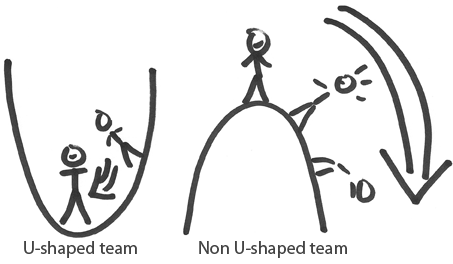
Now it’s time to introduce U-shaped teams. That is, teams that are balanced and where teammates are helping each other. It’s a team where you might have a bad day and are allowed to fail without causing consequences. It’s where the teammates help you get back to normal and what’s more make you feel comfortably included in the team. Your team becomes your safety net and it’s the place where you can dare to be vulnerable. U-shaped teams are also good for productivity since safety means productivity. *
Congruent leadership

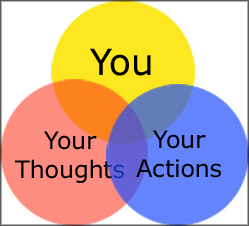
Every organization has its culture that you can see when you observe people at their daily work. This observed culture should be aligned with, or congruent to, the official organizational culture. In reality there is often a gap between the intended culture and the real observed one. For example, management might say that quality is above everything else, while pushing to release new versions of low quality product riddled with defects. Or an organization touts its focus on learning and removing impediments, while the reality is the complete opposite. This post discusses the impact and importance of cultural alignment.

The Manager Sanity Check
So, you’re planning the future. There are is a lot of stuff you are eager to do. But stop and think – are you pushing forward in the right direction?
Make sure there’s a balance between:
- Product – what would makes up evolving in the eyes of our customers?
We are not pushing features for ourselves right? - People – what would make this a better place to work in?
Are we leveraging the skills at our disposal? - Process – are we limiting WIP, improving quality, surfacing problems early?
Done right we should gain time to experiment and fulfilling creative ideas. - Purpose – are we contributing to the society around us?
The Manager Sanity Check
So, you’re planning the future. There are is a lot of stuff you are eager to do. But stop and think – are you pushing forward in the right direction?
Make sure there’s a balance between:
- Product – what would makes up evolving in the eyes of our customers?
We are not pushing features for ourselves right? - People – what would make this a better place to work in?
Are we leveraging the skills at our disposal? - Process – are we limiting WIP, improving quality, surfacing problems early?
Done right we should gain time to experiment and fulfilling creative ideas. - Purpose – are we contributing to the society around us?
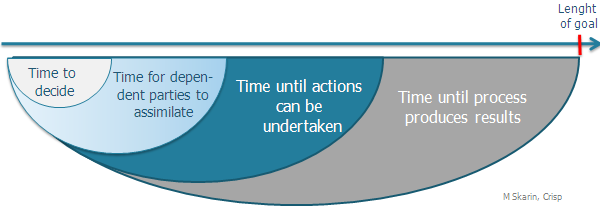
What horizon for should I use for a goal?
How long time should there be between goals?
Some make a habit of setting yearly goals. Some set quarterly. Small organisations in a turmoil can set weekly goals.
But what is "just right"?
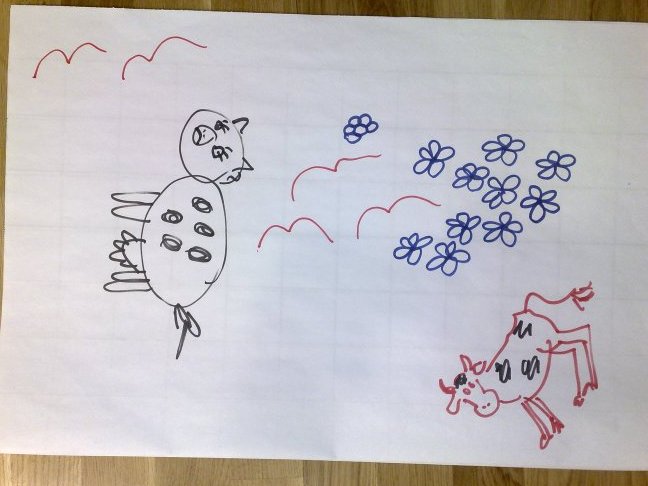
An exercise based on my PSL experience:The power of open-ended requirements

Today I held a class in Scrum and Lean.
I was able to test some of my learnings from the PSL class in a exercises I made up just the day before.
The results were almost too good.
Debrief of Problem Solving Leadership class
Last week I attended the Problem Solving Leadership class held by Jerry Weinberg, Johanna Rothman and Esther Derby.
It was a week full of exercises and simulations and I consumed more knowledge during one week than I usually do for months.
And I am still digesting it. This is a early debrief of what I think I have learnt.