Here are the slides from my session “10 ways to screw up with Scrum and XP” at Agile 2008 in Toronto. Glad that so many of you participated :o) Translations: Brazilian Portuguese (thanks Demetrius Nunes)
Continue readingCrisp's BlogPage 34
from the Crisp Consultants

Kilim – Actors for Java

Just bumped into Kilim, an actors framework for Java. This could be really important! The most exciting thing I’ve seen in several months!
Continue reading
Deep Lean with Mary Poppendieck and Jeff Sutherland

If you’re in Stockholm Sep 25-26 you might be interested in Deep Lean. It’s a 2 day in-depth course on Lean & Agile & Scrum (see the course agenda). The teachers are Mary and Tom Poppendieck, Jeff Sutherland, and myself. Mary and Tom coined the term Lean Software Development and Jeff invented Scrum (the most
Continue reading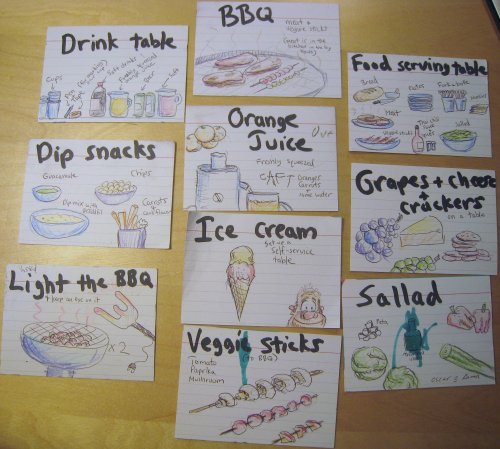
Agile BBQ
The concept of backlogs and taskboards and self-organizing teams is useful in many domains :o) We had Ron & Chet over for BBQ in conjunction with a TDD training session in Stockholm. A great excuse to try an Agile BBQ! With 30 or so guests this saved me a lot of work as host. Just
Continue reading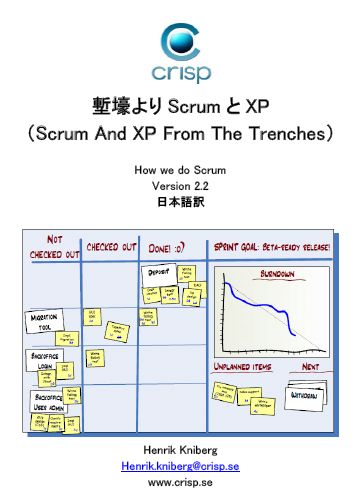
Japanese version of Scrum and XP from the Trenches
Here’s a Japanese translation of my book Scrum and XP from the Trenches. Thanks Shoichi Goto! A Spanish version of the book is also available. Korean, Portuguese, German, Chinese, French, and Slovak translations are underway. I’m impressed by the agile community! All translations will soon be listed on InfoQ. Feel free to email me (henrik.kniberg
Continue reading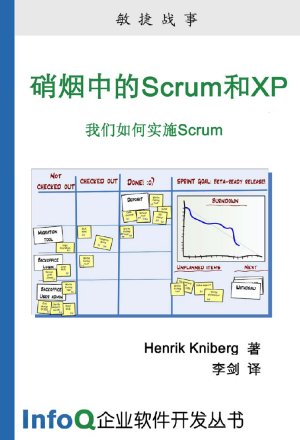
Chinese version of Scrum and XP from the Trenches
Here’s a Chinese translation of my book Scrum and XP from the Trenches. Thanks Jacky Li! A Spanish and Japanese version of the book is also available. Korean, Portuguese, German, French, and Slovak translations are underway. I’m impressed by the agile community! All translations will soon be listed on InfoQ. Feel free to email me
Continue reading
It is time to start encrypting emails
What can I say? I am dismayed and utterly embarrassed by the new Swedish law that will unleash previously unheard of snooping of internet traffic crossing our borders. The only decent way to now communicate by email with people within or outside Sweden is to use encryption. The law allows the Swedish agencies to share
Continue reading
Fixed priced contracts – flawed by design


When talking about Scrum to business people I very often get the question "How do I deal with fixed priced contracts when doing Scrum?"
It struck me today no one who ever asked me this, has come to the conclusion that doing fixed priced contracts could be wrong way to go altogether.
And that is a bit scary.
Continue reading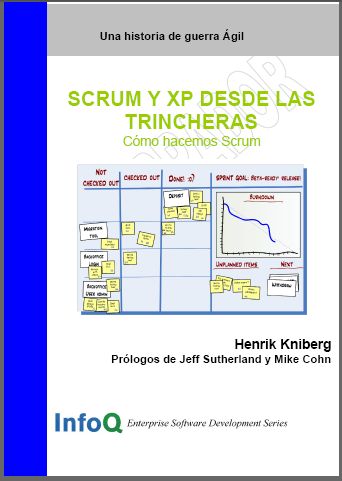
Spanish version of Scrum and XP from the Trenches
Here’s a draft version of the Spanish translation of my book Scrum and XP from the Trenches. Good work Ángel Medinilla! Chinese, Korean, German, and Japanese translations are underway, I’ll let you know when they are done. UPDATE (June 10): Within 1 day of publishing this blog entry I received an offer to translate the
Continue reading
My speech at Agile Sweden 2008

The slides from my speech (productive teams) are now available at: docs.google.com/Presentation
Continue reading
Productive Teams
How do you do to make a team *really* productive ?
– Well you don´t, at least if you´re not a team-member.
From the outside you can only facilitate, provide the right circumstances for a team to be productive.
But if you are a team-member, well, then there is a lot you can do.
And the most important thing, in my opinion, is to have an positive attitude.

Top 3 Tools your Scrum team can’t live without
Here are top three tools for any Scrum project
| 1. | Google Spreadsheets | Your backlog, anywhere & anytime. A perfect lean alternative to your Scrum board on the wall. Anywhere & anytime. | |
| 2. | Confluence Wiki | Atlassian Confluence, wiki as simple as it gets. Any user can get going in this user friendly tool. | |
| 3. | Trillian chat | Hooks up with MSN, ICQ and Yahoo. Hold live discussions going across sites. Just waiting for that Skype plugin.. |
My Scala-presentation is now online
Yesterday I held this Scala presentation at Javaforum in Gothenburg. About 140 persons attended the evening seminar. All in all I think my presentation went pretty well, but Niclas Nilsson pointed out afterwards that I got the definition of Duck Typing wrong. I have corrected this in my S5 slides, which are in Swedish. I’m
Continue reading Steve Yegge continues his push for dynamic languages
Steve Yegge, who works for Google (hehe), continues to push for dynamic languages, most notable JavaScript, in his latest blog, which is a transcript of an hour long speech. My god is he rambling, on and on, it requires a lot of speed reading to spot the interesting parts. He does, for example, point out
Continue reading Twitter, what would I use it for?
This last weekend I succumbed to internal pressure and signed up for a twitter account. I’ve looked at the whole Twitter bonanza for a while without really grokking what it could be used for. Meme spotting, perhaps. Getting to know what your closest friends are doing in real-time, perhaps. But what could you possibly say
Continue reading
history meme
mats@matslw25:/home/matsh$ history | awk ‘{a[$2]++}END{for(i in a){print a[i] " " i}}’ | sort -rn 102 cd 56 ls 50 exit 49 more 42 ll 33 mysql 22 ssh 17 ps 14 svn 12 sudo 12 ant 11 rm 9 kill 8 gedit 6 which 6 man 4 touch 4 mv 4 less 4 grep 4
Continue reading 10 ways to screw up with Scrum and XP
Here are the slides from my session "10 ways to screw up with Scrum and XP", from the JavaForum conference in Malmö. I’ve done this session at other conferences, but updated the slides a little bit each time. Interesting that so many people like to hear about how to get it all wrong :o)
Continue reading
Planning ahead in Scrum
In Scrum it is often perceived that planning takes place on sprint planning day. Getting the required parties in the same place and do planning is a good way of making real time decisions. But getting people together is a dounting or impossible task and this also neglects some of the thought processes that needs to take place before stories are estimatable.
Continue reading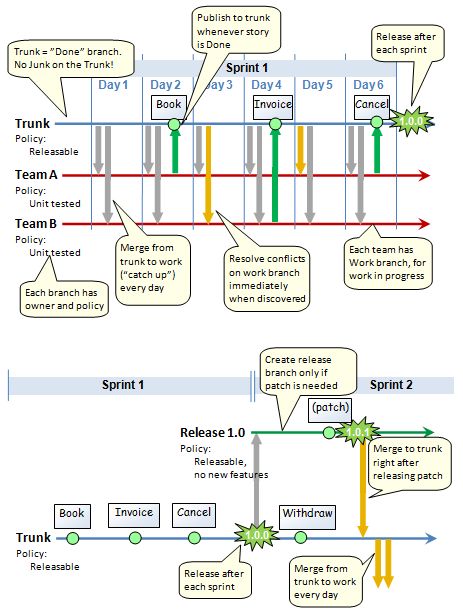
Agile version control with multiple teams
Here’s a paper describing a strategy for version control with multiple teams in an agile environment. It is hosted on InfoQ. Enjoy! Online version (best for reading read on screen) PDF version (best for printing) Single-page summary in print-friendly format.
Continue reading Fyra teknologier för portabilitet i sociala nätverk
Sean Ammirati har under rubriken 4 Technologies for Portability in Social Networks: A Primer bloggat om fyra relativt nya teknologier som gör det möjligt att få portabilitet i framtidens sociala nätverk. Han nämner OpenID, som jag läst om tidigare, men även hCard, XFN & FOAF samt OAuth som jag aldrig hört talas om tidigare, eller
Continue reading Scala 2.7.0 släppt
Det JVM-baserade språket Scala har precis släppts i version 2.7.0. Den stora nyheten är fullt stöd för Java 1.5 generics. Vill ni läsa mer om Scala kan ni läsa boken skriver av Bill Venners, Martin Odersky (skaparen av Scala) och Lex Spoon.
Continue reading Dealing with technical debt
Because of unclear definition of benefit of removing technical debt, PO and teams risk move into a standstill regarding activities to to remove it. This is counter productive, we should remove thresholds of quality improvement activities, not introduce them. So let’s look into a simple definition that can help out.
Continue reading Groovy (and Ruby) only solves half the problem
It is with some dismay I’ve been reading the latest Groovy discussions on JavaLobby. I’ve spent quite some time learning Scala, so it bothered me a bit that I minded another competing language a spot in the limelight. Why would I care? To me as a consultant, language fragmentation is great. Today only a few
Continue reading Automatic Resource Management Blocks i Scala
Joshua Bloch, som numera jobbar på Google, har gjort ett förslag på hur man i Java ska slippa behöva anropa close() på resurser i finally-satser. Ni vet: BuffereInputStream bis = null; try { BuffereInputStream bis = …; // Use bis } finally { if (bis != null) bis.close(); } Chris W.
Continue reading
Best speaker award again :o)
Cool, I won another best speaker award :o) This time at the JFokus conference in Stockholm.
Continue reading
Steve Yegge om hur språkvalet påverkar kodbasens storlek
Steve Yegge, som jag bara stött på vid några tillfällen tidigare, skrev strax före jul ett blogginlägg under rubriken Code’s Worst Enemy. Där försöker han, utifrån erfarenheten från ett spel han skrivit på egen hand i Java, argumentera för att det är Javas fel att hans kodbas nu är på 500 000 rader. Vilket han
Continue reading
Scrum in the large – demystify roadmaps and progress tracking
As a Scrum team, we need to recognise that we are not alone in building business value for our software and provide visibility in where we are heading. By using a roadmap updated per sprint basis is an easy way of making everyone pull in the same direction.
Continue reading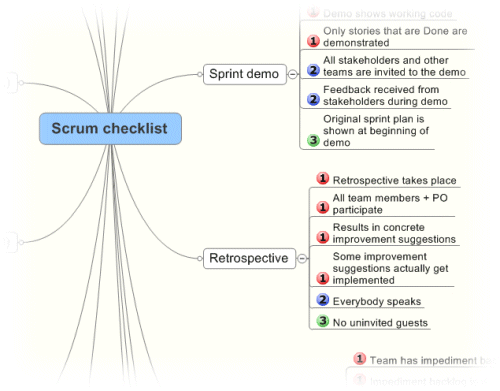
Scrum checklist
NOTE – this checklist is deprecated. The latest version is here.
Here’s a first draft of a simple checklist for those of you that are doing Scrum (or believe so…).
10 ways to screw up with Scrum and XP
Here are the slides from my session "10 ways to screw up with Scrum and XP", from the JFokus conference in Stockholm.
Continue reading Terracotta clustering of Scala Actors
I Scala finns ramverket Actors, som ska vara en nära mappning av Erlangs framgångsrika motsvarighet med samma namn: ett meddelande-baserat ramverk för concurrency. Nu har Jonas Bonér kopplat ihop Scalas Actors med Terracotta, vilket ger oss transparent klustring av dessa Actors! David Pollak, skaparen av webramverket lift för Scala lät hälsa: This is most awesome
Continue reading