
Jag är ingen fotograf eller van skapare av bilder men har alltid gillat bra foton när jag ser dem. Utan att riktigt förstå varför de ser bra ut eller ej. När jag försöker generera bilder med DALL·E 3 eller Midjourney så blir det alltid bara så där och är väldigt frustrerande! Men nu har jag
Continue reading
Hans Brattberg

Getting Started Guide for ChatGPT
Feeling overwhelmed by the possibilities of conversational AI? This guide serves as your initial stepping stone, simplifying the art of prompt crafting to help you get off to a strong start. Basic – Start here Prerequisite: You need ChatGPT plus for this tutorial to work. The free version of ChatGPT is not good enough (and
Continue reading
Create Your Personalized Dynamic Tutorial with ChatGPT-4
A Quick and Easy Guide No longer do you need to read static tutorials online! With ChatGPT-4, you can create your own dynamic, personalized tutorial in no time. It’s like sitting next to an expert in the field who answers all your questions as soon as they arise! The Initial Prompt To get the chat
Continue reading
Supportärenden vs sprintar
Vi funderar kring hur man ska lägga upp tidsallokering rörande support ärenden i sprintar? En fråga från en kursdeltagare på vår senaste CSPO kurs. Här kommer några snabbt svar. Fokus vs snabbt och lyhört Vi vill ha fokus i sprinten, så att alla jobbar tillsammans mot ett gemensamt mål. Samtidigt vill vi inte låta omvärlden (kunder,
Continue reading
Min familjs CO2 kompensation för 2017
Jag skrev tidigare i år under Zero Carbon Manifesto, där jag lovar att komma ner till 0 i min klimatpåverkan, eller kompensera för den del jag inte lyckas med.
Så här i mellandagarna tänkte jag att det är dags att räkna hur jag ligger till för i år!
Läs om hur min familjs samlade utsläpp av CO2 kompenseras till en kostnad av 78 kr i månaden.
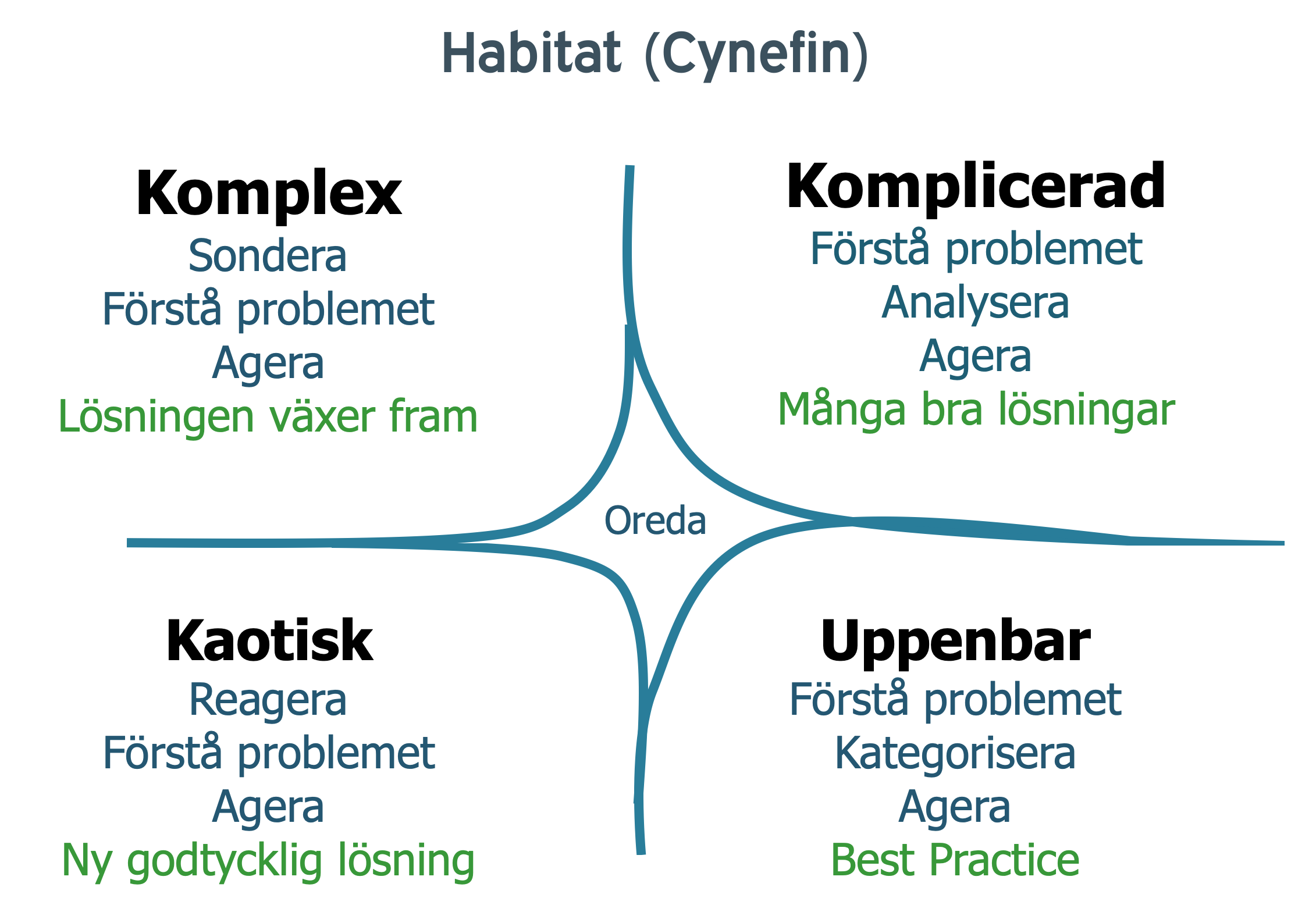
CYNEFIN på svenska
Har nött och blött en översättning av CYNEFIN på svenska. Så här ser det ut just nu: Kom gärna med förslag på förbättringar!
Continue reading
Doing Scrum with Multiple Teams: Comparing Scaling Frameworks


Our article about Scaled Scrum has been published on InfoQ. In the article we describe the basics of LeSS, SAFe, and Scrum@Scale and show the similarities and differences between them You find the article about Scaled Scrum at InfoQ. Enjoy!
Continue reading
Reactions to “No CEO” by the BBC


When the BBC published their “No CEO” piece where Crisp is featured with an article and a 4 minute video, there were a lot of reactions. Friends cheered on Facebook. Colleagues gave a thumbs up on LinkedIn. The article was featured on Hacker News and Slashdot. Here are our reflections on some of the comments we found.
Video clip – The importance of team size and proximity

Jimmy Janlén wanted to make a move star out of me, so he persuaded me to do a short video of an earlier blogpost. So here it is, a 3 minute video clip! Enjoy! /Hans P.S. If you want to read instead, you’ll find the written English version here, and the Swedish version here.
Continue reading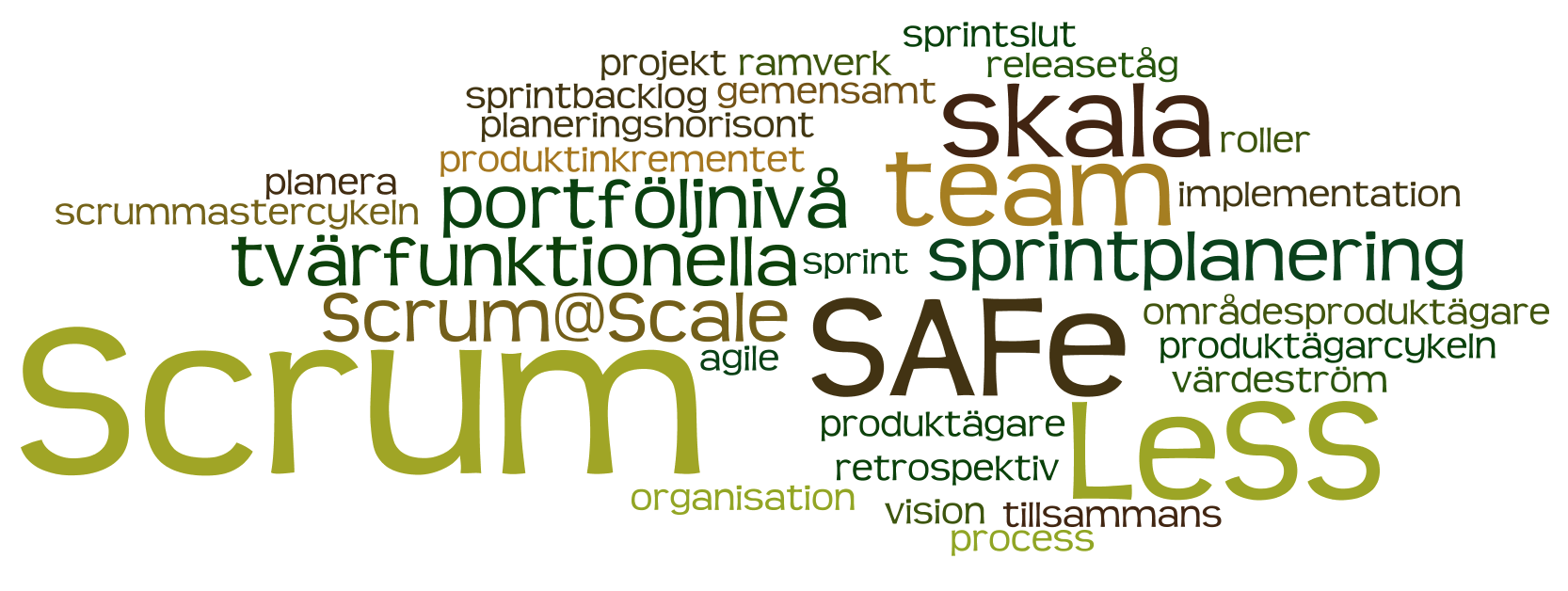
Scrum med flera team
Att organisera flera Scrum team görs på en hel del olika sätt. Här beskriver vi likheter och skillnader mellan några av de ramverk som vi har stött på hos våra kunder och utbildare, LeSS, SAFe och Scrum@Scale.
Gemensamt för LeSS, SAFe och Scrum@Scale
I alla tre ramverken utgår man från att man i botten har vanliga Scrum-team som är tvärfunktionella och självorganiserande.
Man utgår också från att vi alltid försöker bryta ner kraven vertikalt, så att varje inkrement blir så litet som möjligt men ändå kan driftsättas separat.
Underförstått är även att man kör kontinuerlig integration och automatiserad regressionstestning, och att man efter varje sprint har en produkt som går att driftsätta ifall man så väljer.
The importance of size and proximity
We have translated our blog on team size and proximity to english. If you prefer to read it in Swedish it’s called Storlek och närhet har betydelse. The english version you’ll find at Nomad8 site, because Jimmy Janlén is currently in New Zealand. 🙂
Continue reading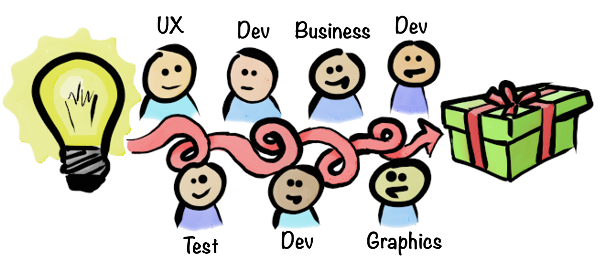
Storlek och närhet har betydelse
Process är dyrt. Större team, distansarbete, deltidsarbete samt många specialister leder till mer uppstyrd process. Kanske är detta självklart, men ju fler företag vi lär känna, desto mer upplever vi detta vara något som ignoreras.
Jobbar vi i någon form av agil process såsom Scrum, Kanban, eller Lean UX värderar vi högt samarbetet mellan olika kompetenser. Ett team av olika kompetenser som kan ta en idé från start till mål brukar kallas tvärfunktionellt.
Enklast möjliga agila process för hur dessa personer kan samarbeta ser ut så här:
Continue reading
Lean Startup comic book “Jennie Discovers” now as a poster
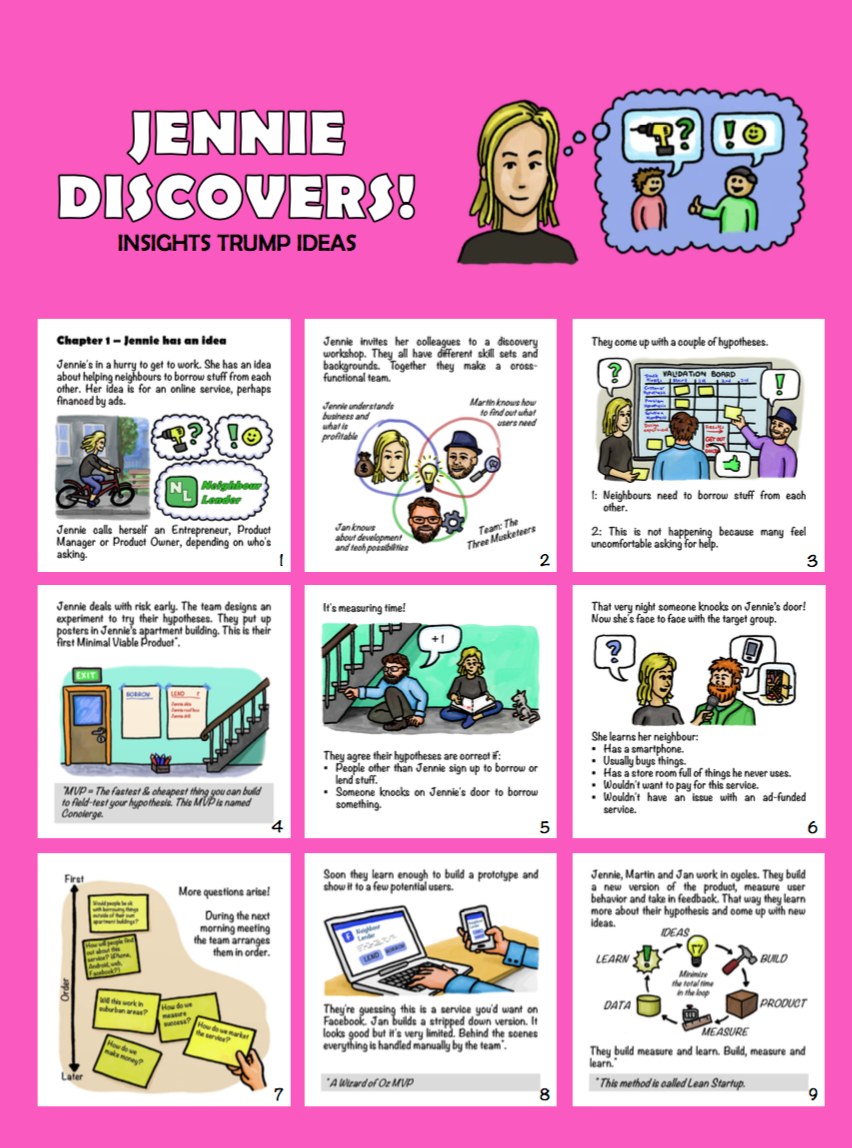
We have just released our short comic as a poster, free to download and print! Jennie Discovers is a comic that tells a story about working Agile and Lean. It’s a story of product discovery, the journey from first idea to continuously releasing and updating a product or service. This book is written for product
Continue reading
Lean Startup
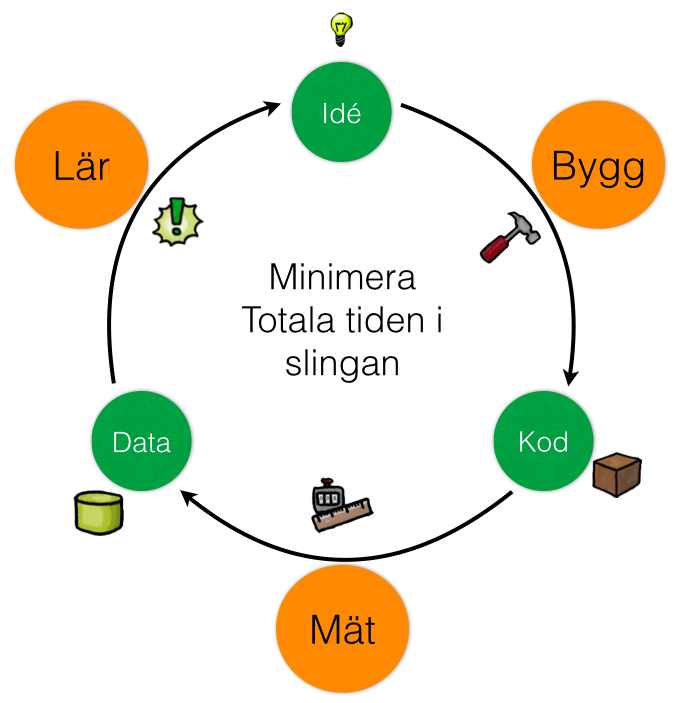
Du har en idé om en tjänst.
Hur kan du snabbast och enklast verifiera att någon vill använda den?
Det är vad Lean Start-up handlar om.
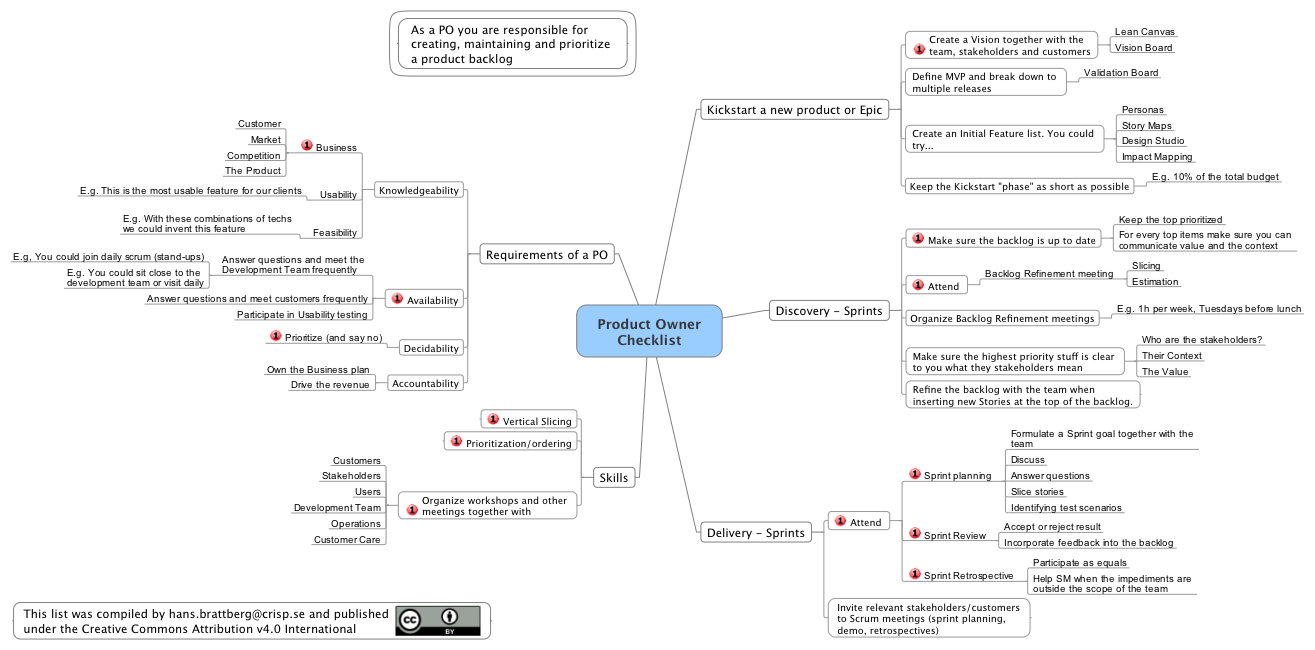
A Scrum Product Owner Checklist as a mind map
If you wonder what a Scrum Product Owner need to do, here’s the checklist (in form of a mind map) for you!
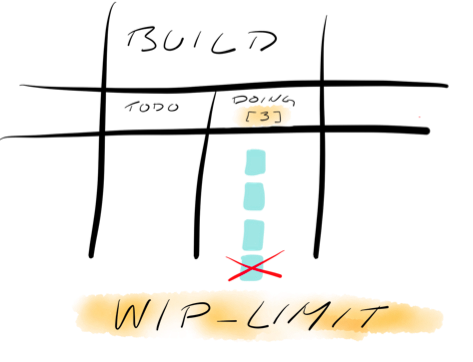
Kanban Basic Patterns
I have collected and distilled some of the basic patterns of Kanban-board patterns I’ve found on various boards. You can combine them in any way that suites you, but you probably don’t need all of them at the same time. Here’s how a sample pattern looks like: If you print the pdf to 9 pages per A3
Continue reading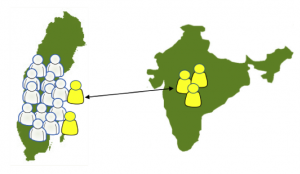
A team experiment with and without offshoring
A cross-functional team I was working with last year had three testers offshore in India. The rest of the team (about 15 people) was co-located here in Stockholm.

Some team members had a nagging feeling that they could go so much faster if the testers also moved to Stockholm so they went to their boss and asked. The reply was that testers are so much less expensive, by a factor 2.3, so it was not possible, unless they could settle with fewer testers.
So they decided to do an experiment for a few months. They moved one of the testers from India to Stockholm and dropped the other two testers (re-allocating the other two to other teams) to see how that would work.
Properties of a good daily stand-up


I had a conversation with some of my colleagues about what makes a good daily stand-up, here are some properties: Time-boxed (15 minutes) Everyone is engaged Synchronization is taking place Attention to problems People ask for help The conversation is about stuff that matters to most people, individual issues are postponed Anyone can lead the
Continue reading Scala Code Kata Roman Numerals
There’s a Scala User Group in Gothenburg that had several meetings during this summer. In one of the meetings the group solved a Kata named KataRomanNumerals (A Kata is a small problem that you do over and over again to learn) The KataRomanNumerals says you should write a function to convert from normal numbers to
Continue readingEmo-lines
If you coach a scrum team but you’re not around to observe them during the sprint, how do you know how they felt about it?
Use Emo-lines

Parprogrammering med Niclas Nilsson
Niclas Nillson, Factor10, har just publicerat ritningar för sitt parprogrammeringsbord.
Continue reading
ScrumMaster på svenska?
Vad borde ScrumMaster heta på svenska, och varför heter det ScrumMaster och inte Scrum Master på engelska?
Enligt en anekdot jag hört så var ursprungsnamnet Scrum Slave, men Ken Schwaber och Jeff Sutherland insåg tidigt att det inte skulle vara så säljande. 🙂
Continue readingLean för mjukvara på 10 minuter
En kort sammanfattning av grunderna i Lean på 10 minuter. Concept To Cash, Cykeltid optimering och köer och flaskhalsar.
Lean handlar om att bli snabb genom att sluta göra onödiga saker.
Lean värdesätter det som levereras och inte det som påbörjas. Att få saker ur händerna istället för att jobba hårt.
Continue reading