
Over the past year, there have been significant advancements in the field of AI, leading to an increased interest in working with AI technologies. Videos and posts showcasing AI’s ability to create perfect images, respond intelligently to questions, or speak like a human being have spread widely. But amidst all this novelty, it’s worth pausing
Continue reading
Mattias Skarin
Leadership as an investment in the digital age (slides)
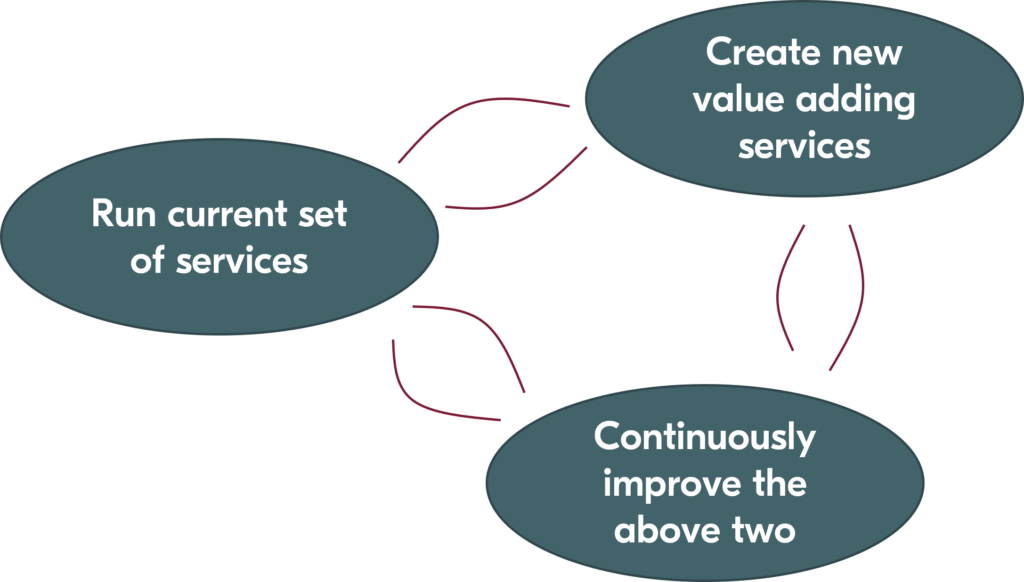
I had the pleasure to run a presentation for company leaders @ Åland on Leadership in the digital age. In the presentation : I want to credit to Roland Granlund for showing me and living – Leadership as an investment. Download the slides here.
Continue reading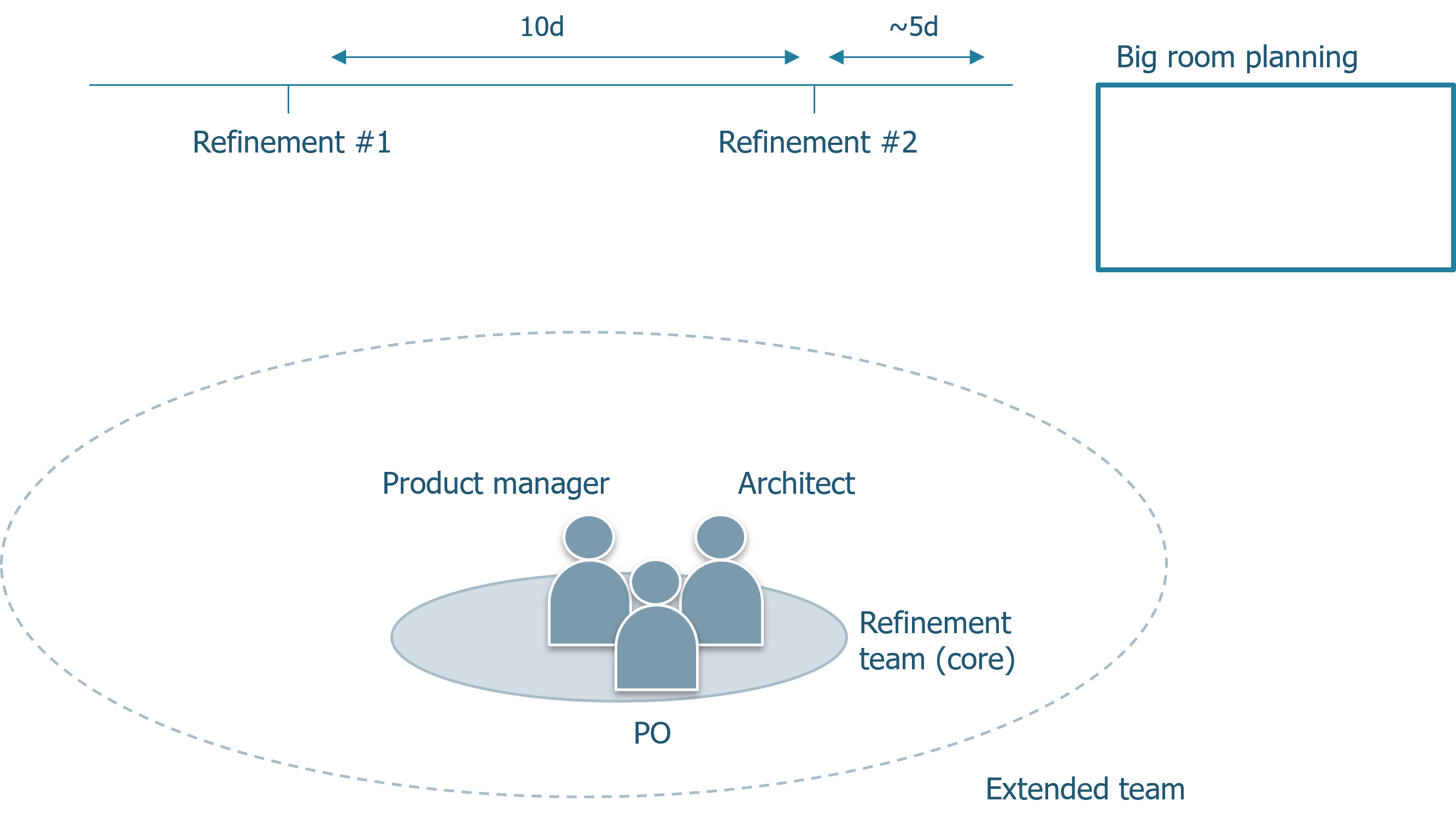
Refinement – preparations for big room planning
If you are running some kind of big room planning pulse, the preparation you put in is half the success. The last thing you want to do is to round up 10 senior team members and turn up with a feature described solely by a one-liner “next gen product”. Scenario Before I go into details
Continue reading
Agile Contracting in Banking using Lean/Agile procurement
In this case story, Rivo shares how Lean/Agile procurement was used to procure a complex solution in banking, in the matter of weeks not years. psst: Interesting to learn how to put it to use? Join our class in May.
Continue reading
Slides: A story of getting better on Alignment
I recently was asked to do a presentation of how companies approach alignment in Agile settings. Where most companies normally put considerable effort putting some alignment framework in place, the really good ones improve this iteratively, matching the process, removing bureaucracy – so it matches the competence level over time. In this presentation I share
Continue reading
Agile Islands 2021 – Slides
Agile Islands had several interesting sessions this year again. For you who haven’t seen this conference, please do! This poses a (positive) challenge to me as speaker, “how the heck do I make my session interesting enough so people stay!” This year I was asked to do an introduction to Agile for people outside IT
Continue reading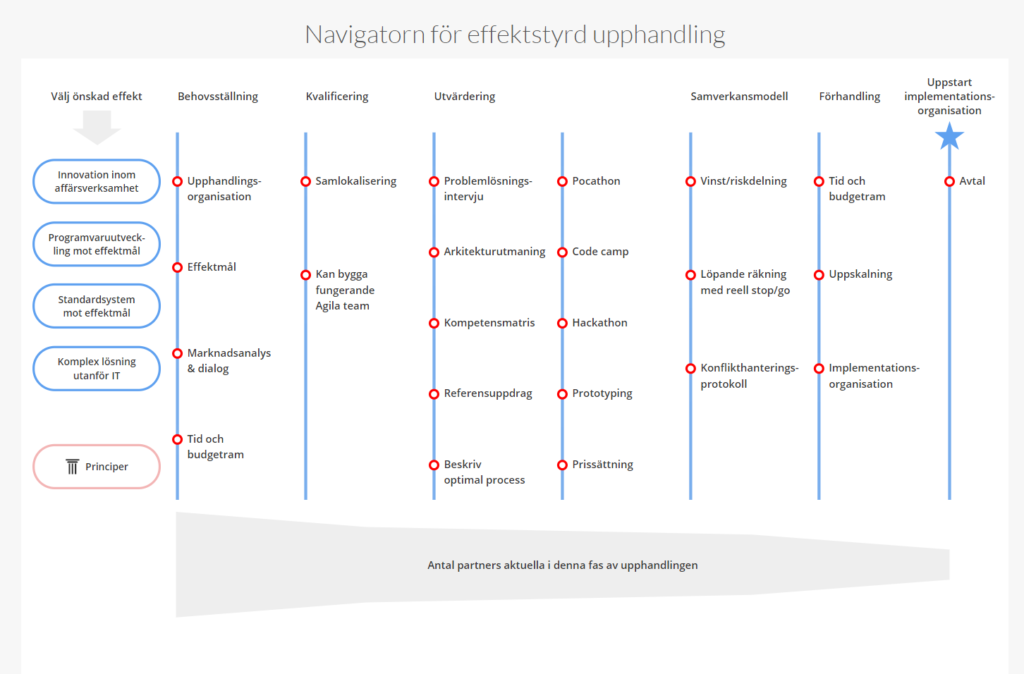
The Navigator just updated – adding Pocathon Big Room event
If you are working with partners to develop innovative solutions, you should take a serious look at Agile contracts. Agile contracts enable you to work Effect driven (over ticking off requirements) using collaboration, and incremental release to reduce risk. There are now good solid case studies that demonstrate how this shortens time to value in
Continue reading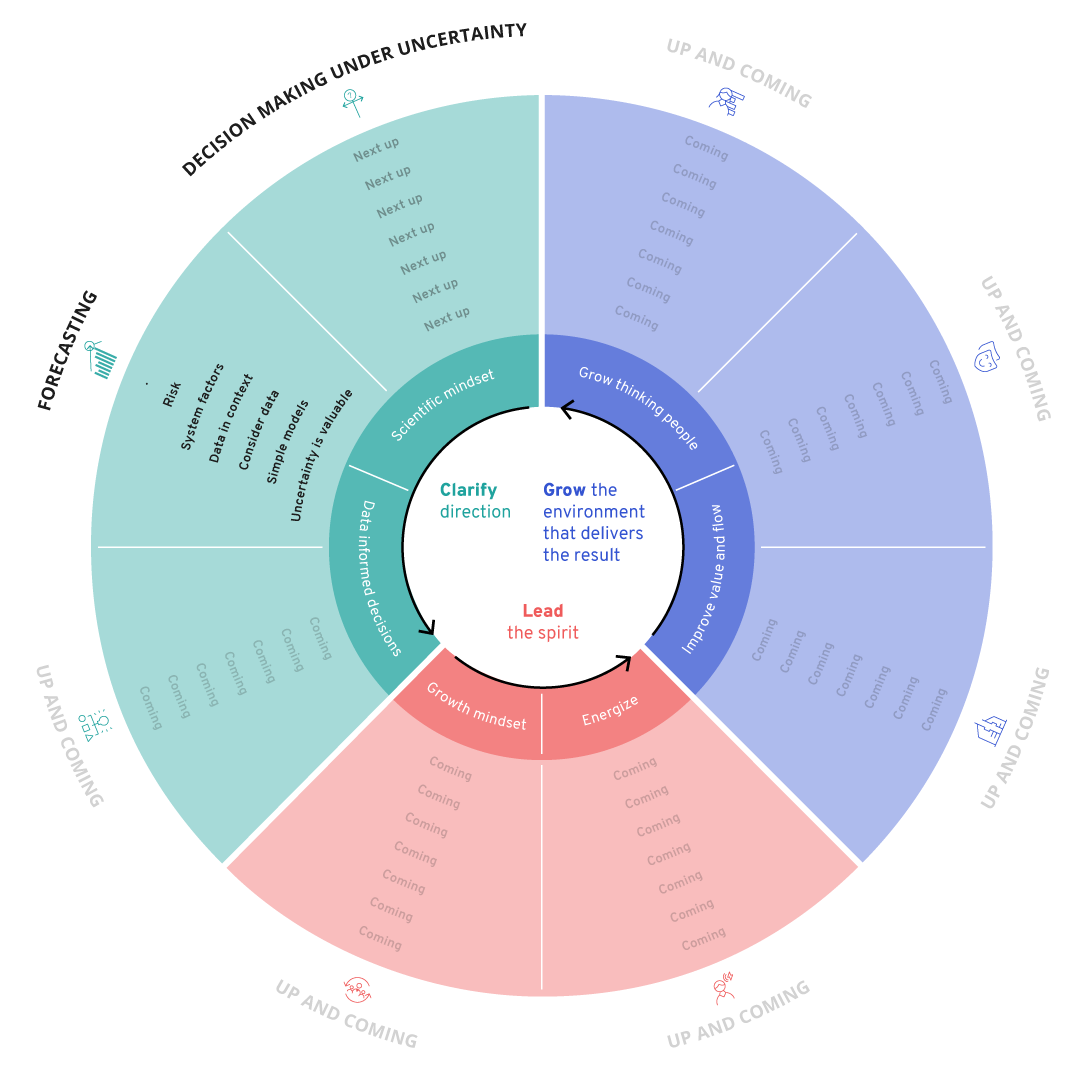
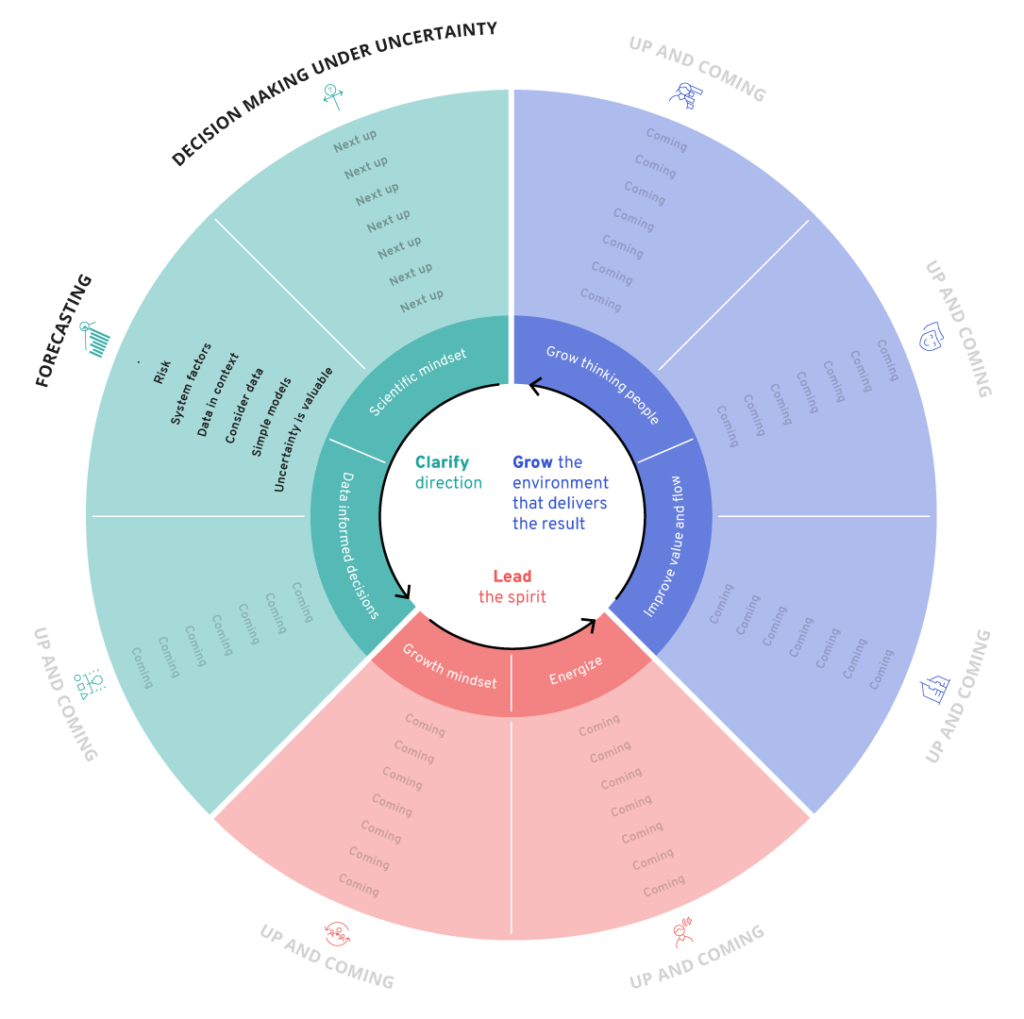
Introducing: The Agile Leadership Practice Library
Have you ever wrestled with these questions in a leadership scenario?
“How can I get the company to be more proactive and self organized without me being around all the time?”
“I’m a practical guy, I get most theories, but what do I do with them?”
“What is a good start when we are talking about building an Agile organization?”
If so, then this is for you.
Today the Agile Leadership Practice Library is launched
Continue reading
Video: Improve your decision making under uncertainty, using four simple techniques
4 simple techniques to improve decision making, in time of uncertainty
Continue reading
Shape the future – share an act of leadership!
What does it take to lead in an Agile environment? You have probably seen inspiring acts of leadership that made a difference. We’d like to hear about it! Today we launch activeagileleadership.com. A platform for leadership insights and practices in Agile environments. Want to know more? Let’s start with Mindset. Leading in an Agile environment
Continue reading
Slides from Agile Islands 2020 – “Agile outside IT”
Agile outside IT – presentation at Agile Islands 2020
Continue reading
Podcast: The SimCorp journey – to and beyond SAFe
A couple of years ago, SimCorp made the leap into Agile using SAFe. In this podcast, we get inside stories to Why they started their journey into Agile The results they have gotten so far Why they now feel ready to make a new leap, inspired by a new Agile vision for the future Participants:
Continue reading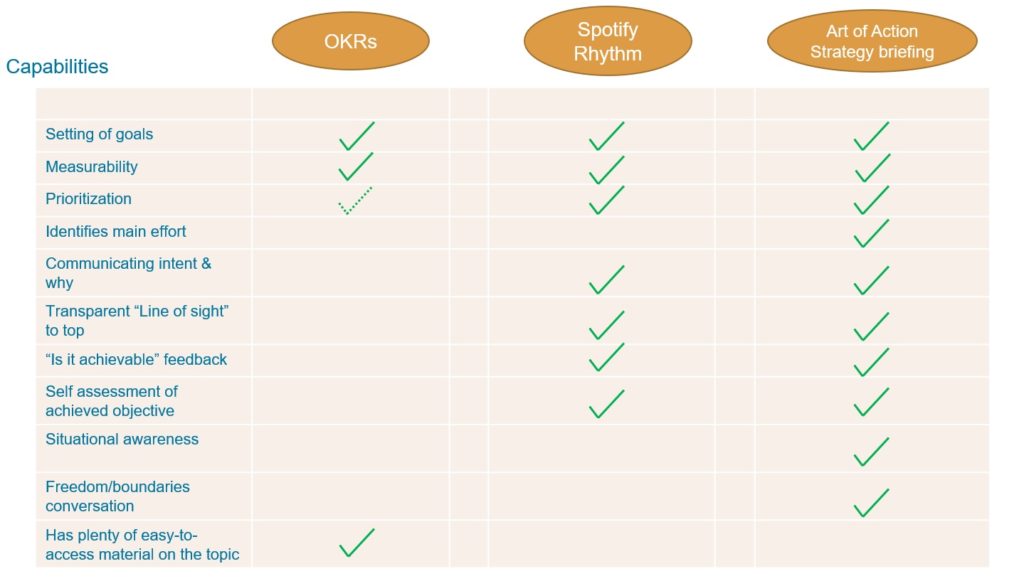
Comparison of three strategy alignment frameworks – OKRs, Spotify Rhythm and Art of Action Strategy Briefing
A downloadable version of this article can be found here.
One of the strongest management trends right now in companies striving towards Agile is undoubtedly OKRs, “Objectives and Key Results”.
But how do OKRs stack up against the alternatives when it comes to alignment frameworks? And what are the potential undesirable behaviors that come with them?
That is what I intend to explore in this article.
Continue reading
Breaking up the monolith at Discovery and enhancing subscription flexibility in one fell swoop

Max – Tell me briefly what your team is up to @ Discovery?
I’m one member of a devteam which takes care of external API’s. We build services for streaming TV (OTT), for example user management, authentication, user entitlements and playback services.
We started this effort to enable a more flexible way to assign entitlements to users, for example through affiliates (like cable TV companies and mobile phone operators). Before, you had to be a subscriber at Discovery to be able to view any content. Being a direct subscriber is called the DTC model, ”Direct To Consumer”. But a large part of the business in some markets still comes from the so called “TV Everywhere” model where the customers come in via affiliates.
Continue reading
Remote creation of an Agile vision
The story: Our client wanted help creating an Agile vision for the future “post SAFe”. How could we do this given that they work on multiple sites?
Can this be done remotely? Yes! During these challenging times, I thought of no better opportunity to share how we approached it.
(image credit: Jirka Matousek, Flickr)
Continue reading

Interview with Stephen Bungay on Strategy Execution and the gaps of OKR’s
Interview with Stephen Bungay on:
– What is the “Art of action” ?
– What is the differences/similarities to OKR’s?
– What organisational capabilities needs to be there, for alignment frameworks to really work?
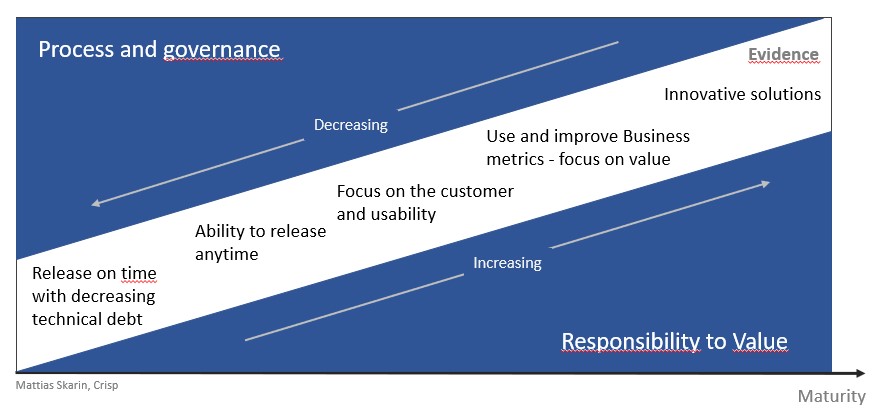
The Value Responsibility shift – Evolving Beyond the SAFe and LeSS frameworks

Are you struggling with improving at a fast enough pace? Perhaps you started your Scaled Agile journey by applying SAFe, parts of SAFe, or maybe even LeSS. What I’ve found is that once companies have started to apply a certain model, which represents one school of thought. they fail (or struggle hard..) to evolve beyond
Continue reading
Agile in Public sector and the “Play with the thought” Digitalisation kit
Slides from Agile Islands 2020 – “Agile in Public sector” and the “Play with the thought” Digitalisation kit
Continue reading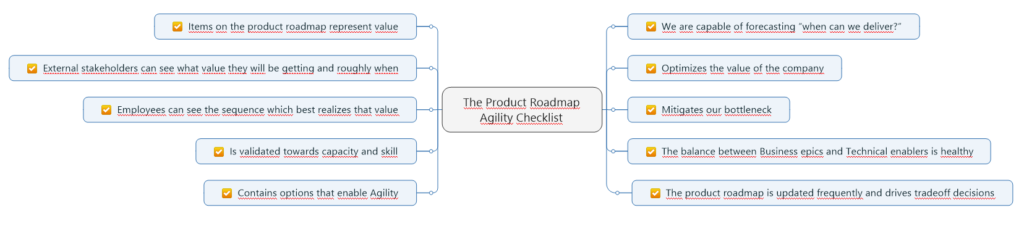
The Product Roadmap Agility Checklist
I see many versions of product roadmaps in my work. Unfortunately very few pass this agility test. Does your product roadmap pass the Product Roadmap Agility checklist?
Download the checklist here.
How self driving car company AID builds its organisation using Agile – interview with the CEO

How do you grow, innovate, and deliver – at the same time? AID (Audi’s unit for self-driving cars) uses Agile to build its organisation at the same pace as their product. We interviewed their CEO Karlheinz Wurm on why they have chosen to do so. We also sneaked in a question – how is it
Continue reading
What is Agile marketing – new article
Consumer behaviors are transforming and the speed of IT development is accellerating. Launching new products is becoming ever easier. This means new challenges – and new opportunities – for marketing departments. The companies that learn to master Agile marketing, in a faster changing world, stands a better chance of building long-lasting relationships with their customers.
Continue reading
The CTO Questions: 10 questions that help you gauge the current state of your tech operations
Ever heard this conversation play out? Manager 1: “We should adopt scaling framework Y.” Manager 2: “But scaling framework Y doesn’t have a recipe for baking cookies. So we need to do X.” Manager 3: “Whut? You’re both wrong. We have Agile teams. We’re good!” In fact, each statement above can be wrong. So the
Continue reading Building Great Release Train Engineers – a talk with Mattias & Yuval
In the scaled Agile framework, one key role is the Release Train Engineer (RTE). But who should I look for to fill this role? What are the first few process improvements experienced RTE’s typically do? Yuval Yeret (AgileSparks) and Mattias Skarin (Crisp) took the time to discuss the traits of a good RTE.
What are the traits of a good RTE?
Yuval: The easy answer to this question is that you are looking for a Scrum master for a team of teams. Going beyond that, when it comes to specific traits, you are looking for someone who cares about process and improvements, someone who has the ability to orchestrate things. But at the same time, someone who also knows when to step back and let the teams organize themselves. A good RTE is a great communicator and can see and understand what is happening.
Mattias: Firstly, a good RTE should be a people person, someone you’d like to talk to and bounce ideas with. Someone who builds trust and energy with their presence. In essence, a good RTE is the Uber Scrum master across teams. Secondly, a good RTE is systematic and makes sure the process events are run and planned in advance. Thirdly, a good RTE should be a good problem solver.
Slides from Agile Islands 2018 -“Decision making under uncertainty”
Åland has one of the coolest visions out there – build an Agile society. They also arrange Agile Islands, a small conference but with sharp content. This year I had the pleasure to speak, so I decided to shed some light on “Decision making under uncertainty”, which is a fascinating subject. Here are the slides. Cheres
Continue reading Agile in Marketing
What happens when you use Agile in marketing? Zalando have been using Lean and Agile tools inside marketing for some time. That makes up an unique and interesting case study, from a company pushing the boundaries. Here’s an interview with Julia Kummel, sharing their experiences from the journey: psst: Do you want to learn how
Continue reading
Using Lean and Agile in racing, interview with formula driver Linus Lundqvist
Racing is essentially product development on steroids. For a number of years I’ve been following the development of a promising young racing driver – Linus Lundqvist. Anyone with a little bit of knowledge about racing,knows that there are many components that need to work together, in order to forge success. Talant – yes. Resources –
Continue reading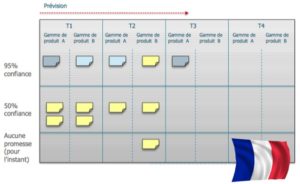
10 kanban boards and their context – now in french
Yep! The collection of Kanban boards now is now available in french. Big thanks to Nicolas Mereaux who made it happen! Here’s the link to “10 tableaux kanban et leur contexte” (fr). (the english 1.5v is available here )
Continue reading On Scaled Agile approches, interview with Yuval Yeret
Yuval is coming to Stockholm to teach a Scaled Agile class (Implementing SAFe) in January. I know Yuval from the Kanban community from a number of years back. We invited him because we know he shares the same pragmatic view on things as we do in Crisp. We made the interview in order for our audience to got to know him
Continue reading Case: Real World SAFe at SimCorp
Not every company starts from a green field. Many carry legacy. So how do you kickstart Agile and get traction in an organisation with scale? We can learn lessons from SimCorp, a successful provider for asset management solutions, who runs 500 developers across 4 sites and went from 0 to 8 release trains in 14 months. Here’s
Continue reading Slides from Devops Greece 2017
Just got back from Athens and Devops Greece where I talked about “Using Kanban in the field, and how we got management buy in to do so” Two key takaways are: Shift leadership behaviours, in order to shift your culture. The good news is: You can all exericise them, they are not personality traits. The invisible
Continue reading