When introducing agile thinking I usually show the Norstrom Inovation Lab video as best agile example. Though, to make some of the points come across I also show a typical example of a failed traditional project. I have long searched for a short video illustrating a failed project and accidentally found this gem when watching the whole
Continue reading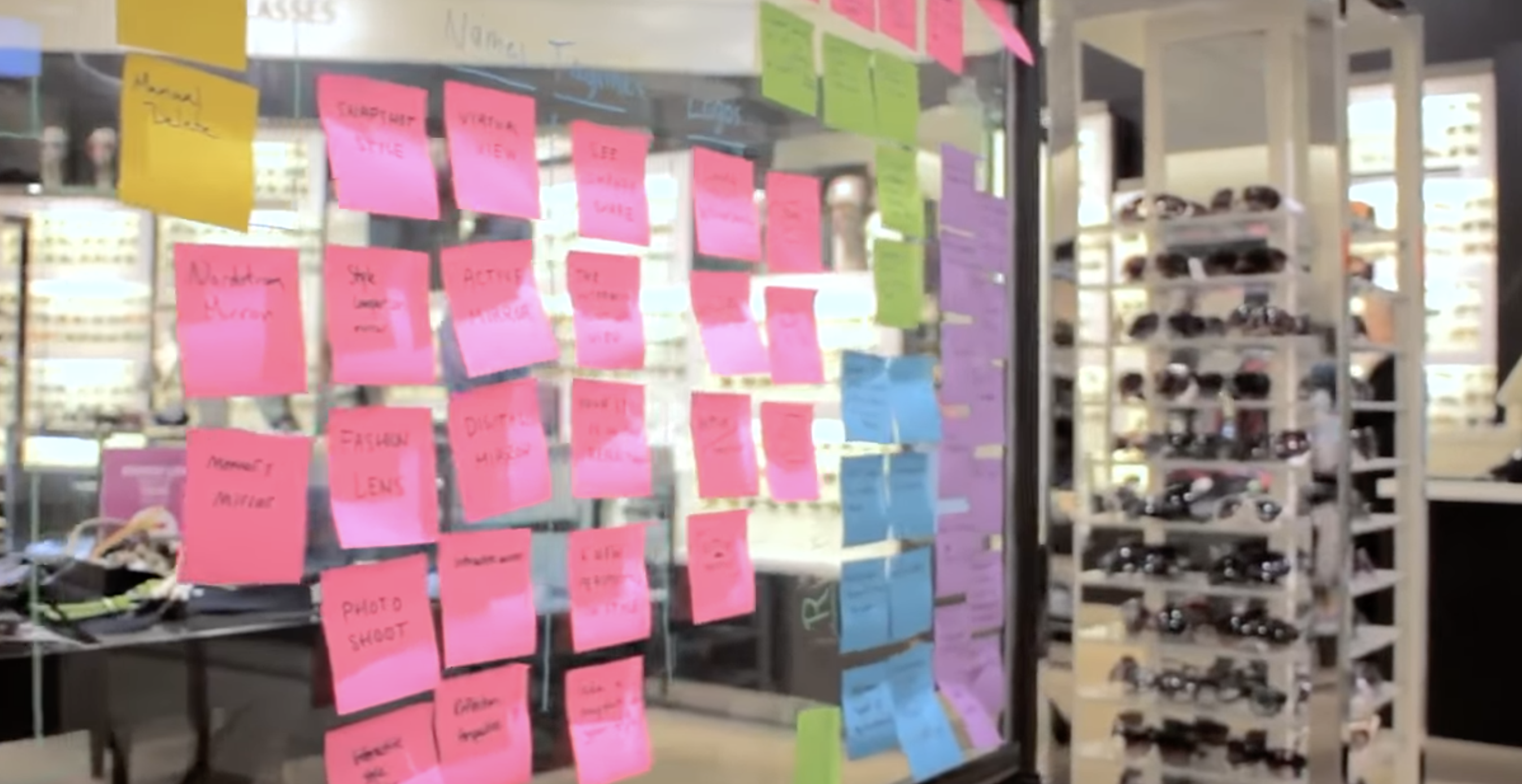
The Best Example of Agile Developement

Nowadays, when explaining the concept of Agile values and techniques I always start by showing a short and brilliant video from Norstrom Inovation Lab. The video shows how a team successfully delivers an iPad app withing a week. It all starts with an idea: “Our customers often use their phones to take pictures of themselves when trying
Continue reading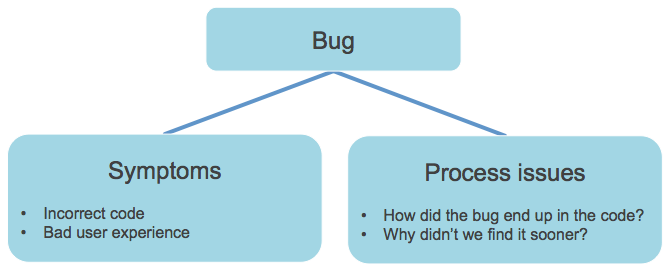
Every bug means two problems

Finding a bug in your application actually means you have at least two kinds of problems: symptoms and process issues. To deal with quality in a sustainable way, you have to fix both!
Retrospective using Jimmy Cards

I had taken on to facilitate a retrospective for my colleagues’ team. They wanted a different retrospective than the usual. So we borrowed Crisp’s office and used Jimmy Cards!
The group was around 15 persons from two teams. They all knew each other well which I believe is crucial as the questions on the cards can be challenging.
In this post I’ll give you the recipe which Jimmy and I came up with for this particular retrospective.
Guest blog from Jeff Gothelf – Lean UX in the Enterprise: 5 hills to climb

This is a guest blog from Jeff Gothelf who will have an open course in Lean UX with Crisp in May 2013
Jeff Gothelf has spent a 15 year career as an agile product designer, team leader, blogger and teacher. He is one of the leading voices on the topic of Agile UX and Lean UX. In addition, Jeff is the author of the O’Reilly book (2013), Lean UX: Applying lean principles to improve user experience (www.leanuxbook.com). He is a highly sought-after international speaker and workshop leader. Jeff has led cross-functional product design teams at TheLadders, Publicis Modem, WebTrends, Fidelity, and AOL. In 2012, Jeff launched Proof, a product design and innovation studio that combines lean processes with strategy, design and technology that has since been acquired by Neo.com where he is now Managing Director.
Here is Jeffs course Lean UX – Cross functional collaboration 20-21 of May in Stockholm >
Lean UX in the Enterprise: 5 hills to climb
Expanding my original post on challenges implementing Lean UX in the enterprise, I wanted to add a couple more hurdles that most companies will undoubtedly have to go through to build, collaborative, cross-functional and agile teams.
Co-location is a dirty word
Many large companies are distributed across countries, time zones and cultures. Getting employees to work together is tough enough when they’re sitting across the hall from each other. The distance between distributed teams breaks down a collaborative culture very quickly.Continue reading

How to make it Stick? A Journey from Agile to Lean
I have been working as a consultant for about 6 years by now and under that time there is one thing that has had me really frustrated: how do I make it stick? Success It usually worked like this: I introduce some measure of Agile to setup a project to succeed or to make an
Continue reading
Retrospective protocol for finding the whining

Those agile geeks think it is important to have so called retrospective meetings so that they can improve. But they should improve when we tell them to, right?
However, a tip to use if they persist in having those meetings during office hours, is to have some of your allies present and write a protocol and report to you. Video cam is even better.

Släng titlarna

Finns nu i bokform på Leanpub
Detta är den fjärde posten i en serie om agil HR “from the trenches”.
Del 1: Continuous investment
Del 2: Lägg ner utvecklingssamtalen
Del 3: Lön är rättvis ersättning – inte belöning
Del 4: Släng titlarna
Del 5: Ny kunskap – ett gemensamt ansvar, avsnitt 1
Del 6: Hitta rätt folk – släpp dem lös
Släng titlarna
Låt oss börja med två okontroversiella påståenden: Företag bygger på vertikala hierarkier och horisontell specialisering Ok?
Låt oss ta det en gång till.
Företag är hierarkier. Jag skriver här medvetet företag och inte organisationer i största allmänhet. Huruvida organisationer måste vara hierarkiska låter jag nämligen vara en öppen fråga, men företag är hierarkier, per definition.
Det finns förvisso många olika teorier om varför företag finns, men i princip alla går ut på att förklara varför människor som utför aktiviteter på en marknad “väljer” att karva ut en bit av denna ekonomiska aktivitet och där slopa marknadsmekanismerna.
Huruvida skälet till detta är att det minskar transaktionskostnaderna, eller att det löser problem med så kallade externa effekter (marknadsmisslyckanden), eller för att det ökar effektiviteten i hantering av olika egendomar, eller för att det ger makt att hantera ekonomiskt överskott, eller att det helt enkelt ligger i den mänskliga naturen att dominera andra, spelat för vårt resonemang här ingen roll.
Poängen är att kärnan i företag är att någon (företagaren) skriver långsiktiga kontrakt med en eller flera (anställda) som avsäger sig vissa av sina friheter för att i stället bli företagarens agenter. Som en av pristagarna till Sveriges Riksbanks pris i ekonomi till Alfred Nobels minne sammanfattar: Företagaren “försöker utforma avtal med agenterna som ska stimulera dem att öka hans vinst, och han kontrollerar deras prestationer”.
Eller som Henry Ford uttryckte det i lite mer klartext: “Jag tänker betala er tillräckligt mycket för att ni ska finna det värt att acceptera mina diktat i jobbet”.

The Fake Burndown Ruler ™
Order the Evil Coach’s Fake Burndown Ruler ™ TODAY! With this brand new innovative plastic ruler you can now help your team create awesome Sprint Burndowns. Every day! Every sprint!

It’s fast, it’s cheap and as a bonus you get rid of some “waste”. The Evil Coach’s Fake Burndown Ruler ™ makes the daily estimation of remaining work unnecessary.
The Scrum Master no longer needs to do the painstaking exercise of manually adding up the hours on all the post-its. Simply hold up the ruler on your chart and draw you burndown! It’s that simple! If you are lucky, the Daily Scrum is over in less than 90 seconds.

How to build the Right Thing

The software industry is going through a shift of mindset.
Agile basically solved the problem of how to deliver software. Most any company that applies an agile method and mindset can get working software out the door. Now, the biggest waste in software development seems to be building the wrong product, or the wrong features.
“There is surely nothing quite so useless as doing with great efficiency that which should not be done at all” -Peter Drucker
This insight has given rise to methods and techniques such as Lean Startup, Impact Mapping, Story Mapping, Feature Injection, etc. But is there a common denominator, a set of underlying principles?
On Feb 11, Gojko Adzic organized a full-day meetup in London with people deeply engaged in this issue, people like Jeff Patton, Mary Poppendieck, Ingrid Domingues, Chris Matts and others who have been inventing and spreading techniques for dealing with the how-to-build-the-right-stuff issue.
It was a very inspiring day! We compared our different approaches and experiences, extracted the core principles, and (to our surprise) managed to condense it into this shared message:
Great results happen when:
1. People know why they are doing their work.
2. Organizations focus on outcomes and impacts rather than features.
3. Teams decide what to do next based on immediate and direct feedback from the use of their work.
4. Everyone cares.
There. So now just go do it! 🙂
Actually, if you want a more detailed description of each point see Gojko’s post.
Posts from the other participants:
- Gojko Adzic – The February Revolution
- Karl Scotland – Heuristics for building the Right Thing
Full participant list (in no particular order): Gojko Adzic, Mary Poppendieck, Gabrielle Benefield, Tom Poppendieck, Gordon Weir, Henrik Kniberg, Jeff Patton, Ingrid Domingues, Karl Scotland, Russ Miles, Christian Hassa, Dulce Goncalves, Aaron Sanders, Shadi Almviken, Chris Matts, Olaf Lewitz and Matthias Edinger.

Facilitating a future vision @ Crisp

Every organization needs to find it’s path, where to go next. Or it can choose just go “wherever” 🙂 But let’s imagine your want to grasp the state of your hope, dreams and future of your creative people to understand what opportunities to grasp and which to let go of. Let’s imagine you need to do that among a group of self going free radicals, working in different places that does not regularly meet. Wait- that sounds like Crisp 🙂 Let me share how we grasped our future vision.

The Future of Software Development


What will software development be like in the future? “Agile” as we know it, will not be around, nor will test-driven development, continuous delivery, or BDD-like methodologies. I’ve been pondering this for a while, and based on some observations and a dose of wishful thinking, I’ve arrived at the conclusion above. Do you agree?
Pleased to meet you

Hi there, scouting the enemy, are we? This agile thing is spreading like the flu and the resources are starting to notice. Soon they’ll be out of control. We can’t have that, can we? Fret no more, this blog is here to rescue managers like you, who appreciate command and control. If you can’t win a war with a strategy, then it is not worth considering.
I will provide you with some handy tips to counter the agile movement before it gets out of hand. We don’t want to be fired, we want to be feared!
Lön är rättvis ersättning – Agil HR i praktiken
Finns nu i bokform på Leanpub
Detta är den tredje posten i en serie om agil HR “from the trenches”.
Del 1: Continuous investment
Del 2: Lägg ner utvecklingssamtalen
Del 3: Lön är rättvis ersättning – inte belöning
Del 4: Släng titlarna
Del 5: Ny kunskap – ett gemensamt ansvar, avsnitt 1
Del 6: Hitta rätt folk – släpp dem lös
Lön är rättvis ersättning – inte belöning
Så här är alltså läget: Vi har lagt ner utvecklingssamtalen och allt arbete sker i team där deltagarna tar gemensamt ansvar för sitt arbete och resultat. Då reser sig förstås frågan: hur sätter man lön i en sådan organisation? Ingen enskild prestation, ja, egentligen inte ens ett enskilt (synligt) ansvar finns ju att bedöma och ersätta eller belöna. Och inte heller har vi ett samtal där medarbetarna (lite i hemlighet) kan bedömas. Svårt läge.
Tyvärr är det värre än så.
Lägg ner utvecklingssamtalen – Agil HR i praktiken
Finns nu i bokform på Leanpub
Detta är den andra posten i en serie om agil HR “from the trenches”.
Del 1: Continuous investment
Del 2: Lägg ner utvecklingssamtalen
Del 3: Lön är rättvis ersättning – inte belöning
Del 4: Släng titlarna
Del 5: Ny kunskap – ett gemensamt ansvar, avsnitt 1
Del 6: Hitta rätt folk – släpp dem lös
Lägg ner utvecklingssamtalen
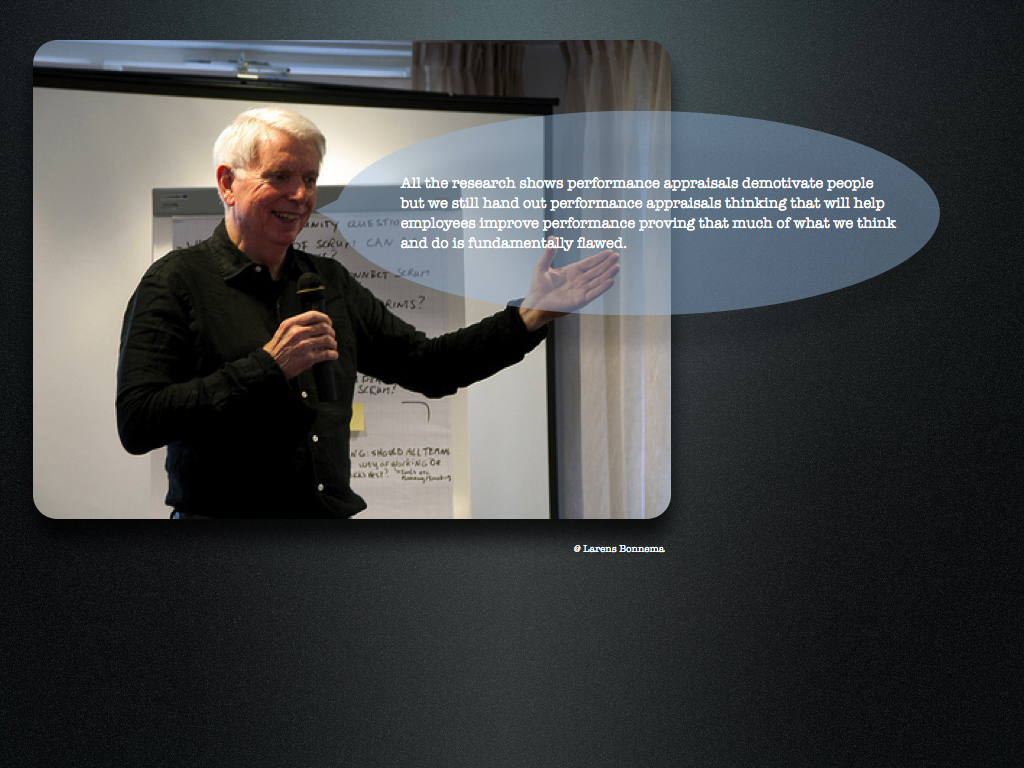
Första gången jag hörde någon på allvar utmana utvecklingssamtal var på ett seminarie med Jeff Sutherland (Scrums fader). Jag tror det var 2007 eller möjligen 2008. Jag hade då erfarenhet av att sitta i bägge ändarna av utvecklingssamtal.
Som medarbetare kunde jag inte minnas ett enda sådant utvecklingssamtal som verkligen varit meningsfullt. Några hade möjligen varit harmlösa och trevliga samtal, men åtminstone ett par av dem hade varit direkt demotiverande och framförallt minskat mitt förtroende för samtalspartnern: min chef.
Is your software architecture explicit?

You know, every system has a software architecture and a software design. Whether you think about your system’s architecture or not, it will have one. Here is an example of two methods in a class I recently saw. It is not architecture, it is good old OOD, but it exemplifies what can happen if you
Continue reading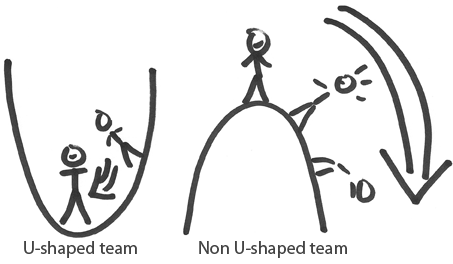
T-shaped people and U-shaped teams

I guess you have heard about T-shaped people, that is, people with deep skills within one or a few areas combined with some knowledge in many areas.
Now it’s time to introduce U-shaped teams. That is, teams that are balanced and where teammates are helping each other. It’s a team where you might have a bad day and are allowed to fail without causing consequences. It’s where the teammates help you get back to normal and what’s more make you feel comfortably included in the team. Your team becomes your safety net and it’s the place where you can dare to be vulnerable. U-shaped teams are also good for productivity since safety means productivity. *

Continuous investment – Agil HR i praktiken
Finns nu i bokform på Leanpub
“Software developers…principal work is human communication to organize the users’ expressions of needs into formal procedure” Tom DeMarco, Peopleware
Detta är den första posten i en serie om agil HR “from the trenches”.
Del 1: Continuous investment
Del 2: Lägg ner utvecklingssamtalen
Del 3: Lön är rättvis ersättning – inte belöning
Del 4: Släng titlarna
Del 5: Ny kunskap – ett gemensamt ansvar, avsnitt 1
Del 6: Hitta rätt folk – släpp dem lös
Del 7: Kontor – låt teamen bestämma
Del 8: Tidredovisning – och andra onödiga system
Del 9: Bortom agile – unmanagement
Continuous investment
Våren 2011 slutade jag med utvecklingssamtal. Jag var då utvecklingschef på ett produktföretag och hade som alla andra chefer i Sverige (och den anglosaxiska världen) ett årligt återkommande samtal med var och en av mina medarbetare där jag – det ingår ju i själva grundidén om utvecklingssamtal – skulle hjälpa dem att utveckla sig i sitt arbete.
Min tanke var att göra som jag så ofta gjort när det handlar om (agil) organisationsförändring: gör ett experiment, mer eller mindre i det tysta, och se hur det går. Nu är just utvecklingssamtal lite svåra att lägga ner i det tysta, och då inte bara för att jag pratade om det på Agila Sverige det året – det var ju inte ett så diskret sätt att göra det på – och inte heller för att det ju blir uppenbart för de som blir av med den enda chansen på året att utvecklas (ironi), men framförallt eftersom det just är en av de ganska få väldefinierade processer som företag normal har. För att lägga ner utvecklingssamtal måste man (oftast) prata åtminstone med HR (och antagligen med ledningsgruppen, så var det i varje fall i mitt fall).
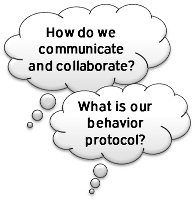
What questions does your Working Agreement answer?

All teams have some sense of what is regarded as acceptable or good behavior within the team. Most people know that colleagues don’t appreciate it when you’re late. Perhaps you have a silent agreement regarding how you vote and make decisions. Some teams write down their behavior and collaborative “protocol” in a Working Agreement.
You might think that common sense covers it and writing it down seems silly, but surprise – common sense is subjective and you will have different opinions about things. Great! Let’s discuss and find our common ground.
The act of discussing it and writing it down is also a strong team building activity and forges relationships between team members. Any new team, or any team for that matter, could benefit greatly from a one-hour workshop. It could be part of a retrospective or a stand-alone meeting.

Vad innebär agila kontrakt? – slides från Meridiumdagen
Sammanfattar i min presentation från Meridiumdagen ett antal Agila kontrakt som är i bruk idag och vad man bör tänka på när man använder dem. —————— For the English reader: What does Agile contracts really mean? – I walk through a number of real contracts that are in use today (presentation was given in
Continue reading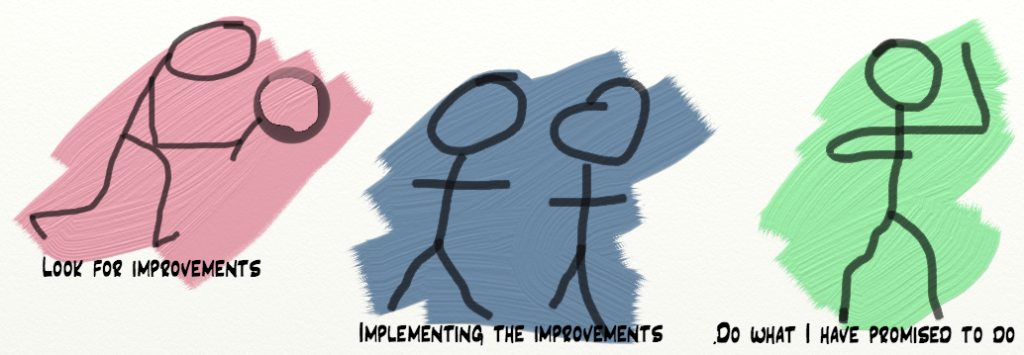
Shorter version of: Responsibility the Agile way
A couple of months have passed since I wrote the post “Responsibility the Agile way” and I have refined it since then. Here is the new and more slim version:
1) I promise to look for improvements, both opportunities and problems.
2) I promise to participate in implementing the improvements. I will at least communicate the improvement possibilities I have found.
Team LiftOff with Market of Skills and Competence Matrix

Introduction
I got into agile development during the late 90s when I read Kent Beck’s book about extreme programming (XP). It was mostly the technical aspects of XP that attracted me; I liked test driven development and continuous integration and I understood the benefit of continuously reviewing the code by doing pair programming. It took some time for me to turn my attention to what I mainly focus on today, and what I see is a cornerstone of agile, teamwork. Product development is in most cases a complex endeavor where you need a high level of collaboration and teamwork to reach required outcome. To succeed you have to make sure the participants build on each others strength and knowledge, and where they see differences as something valuable and important. But it is not certain that all working groups ends up as a true team. As a team coach you need to pay attention to building the team at the beginning. This post will describe a few tools that I have used in order to form teams.

Agile Product Ownership in a nutshell
This is basically a 1 day product ownership course compressed into a 15 minute animated presentation.
Over a million views! Some call it “The best 15 minutes on the Internet” 🙂
There’s obviously more to product ownership than this, so see this is a high level summary.
- Here’s the complete drawing (.png format)
- Here’s a downloadable version of the video, in case you don’t want to stream (.mov format, 90 Mb)

Special thanks to Alistair Cockburn, Tom & Mary Poppendieck, Jeff Patton, Ron Jeffries, Jeff Sutherland, and Michael Dubakov for providing many of the models, metaphors, and ideas that I use in this presentation.
Translations: (see also the translation guide by Cédric Chevalerias)
- Chinese – simplified (subtitles)
- Chinese – traditional (subtitles)
- French(subtitles)
- French (voice)
- German (subtitles)
- German(voice)
- Italian (voice)
- Japanese (subtitles)
- Polish (voice)
- Portuguese – Portugal (voice)
- Portuguese – Brazil (voice)
- Russian (voice)
- Spanish (subtitles)
Below is a full transcript in english. But I recommend watching the video instead of reading the transcript. The video is 100% visual, the transcript is 0% visual…

Five team principles

Building a well-functioning software delivery team is complicated. There are many factors to consider. Current team (if any), needed skills, available people, company politics etc.
There are some fundamentals that often (but not always) seem to work.
My fundamental principles for teams
- Static
- Cross-functional
- 5-9 people
- Co-located
- Dedicated team members (belong to only one team)
I find these principles to be a useful basis for discussion, when helping managers configure their teams.
The principles are goals, and one must realize that all cannot be achieved all of the time, nor instantly.

Programmerarna visar vägen
Lite i skymundan pågår något av en revolution inifrån i IT-branschen, och då särskilt i företag med många programmerare. På gräsrotskonferenser, i nätfora och i management-litteratur äger vår tids kanske mest avancerade och levande diskussion om hur man bäst organiserar arbete rum. Om det skriver jag i en längre essä om hur programmerarna visar vägen
Continue reading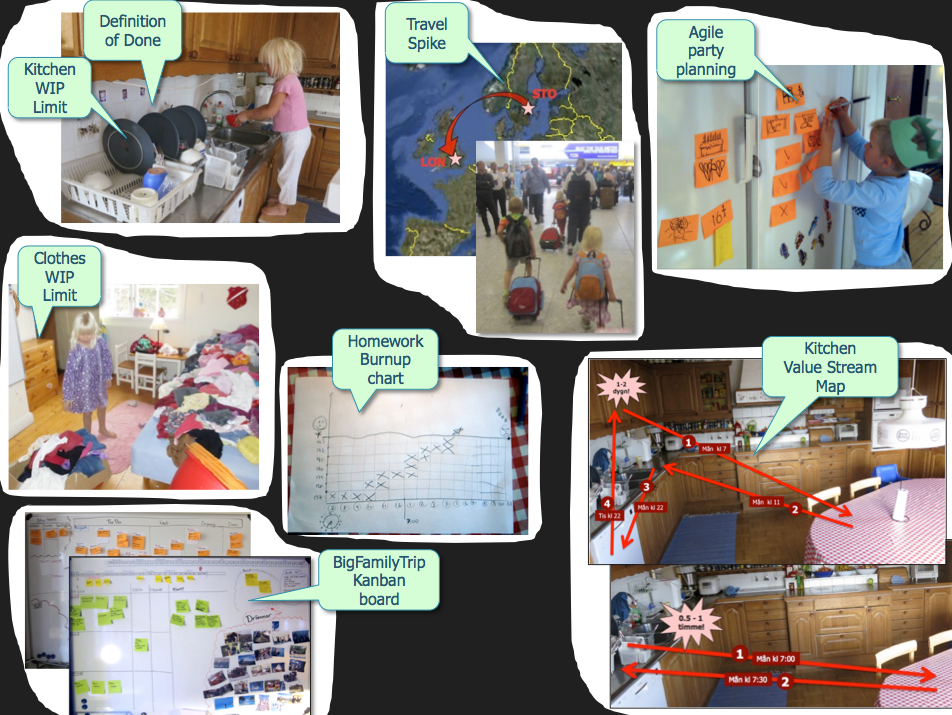
Agile @ Home (AgileEE keynote)
Here are the slides for my third(!) keynote at Agile Eastern Europe. The guy who was supposed to do the afternoon keynote couldn’t make it, so I was invited to jump up and do another one (talked about Spotify, but I don’t yet have permission to publish those slides, sorry). And then that one finished early, so I filled in the last 20 minutes with this short talk about Agile @ Home. Three keynotes in one day must be some kind of record 🙂
Thanks for listening, and glad to see that so many of you were so excited about the idea of using Agile outside of work 🙂

Lean from the Trenches keynote @ AgileEE, Kiev
Here are the slides for my keynote “Lean from the Trenches” at Agile Eastern Europe, Kiev. And here is the book/ebook, in case you want more details. Thanks for attending!
Continue reading
Interview with Christopher Avery
In April this year we had Christopher Avery at Crisp giving his two days workshop Creating Result Based Teams. I read Christopher’s book about creating effective teams a few years ago which I found very inspiring and it was loaded with a lot of wisdom about working with teams. I was therefore very excited to
Continue reading
Lägg ner!
Septembernumret för tidskriften Personal och ledarskap har utvecklingssamtal som tema. Tidskriften är medlemstidning för Sveriges HR-förening och Sveriges ledande tidskrift inom personal och human resources. Inför numret blev jag intervjuad om den frågan eftersom jag som utvecklingschef på Atex Polopoly lade ner utvecklingssamtalen.
Artikeln finns här, men man måste man vara medlem för att komma åt den.
Eftersom texten är lite svår att komma åt bjuder jag på ett par citat från den, som inleds med ingressen:
Peter Antman, konsult på Crisp kallar utvecklingssamtal för ”Tjänstemännens tidsstudieman”. Som utvecklingschef tog han ett drastiskt grepp – och lade ner utvecklingssamtalet.

Agile Evening with Alistair and Henrik
On Tuesday Oct 2 Alistair Cockburn and I are hosting a free evening event at Crisp. I’ll be talking a bit about my current client Spotify, which has a cool scaling approach with “tribes”, “squads”, “guilds”, and “chapters”. Then Alistair will talk about whatever topic the participants choose. Then we’ll have discussions and finger food. Feel free to
Continue reading